
















Poly Mailer Sizes: How to Pick the Right Size for Clothes, Hoodies and Boxes
Updated · Vorex Packaging
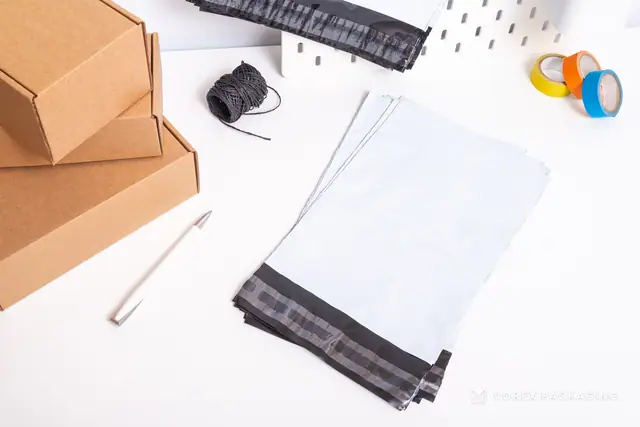
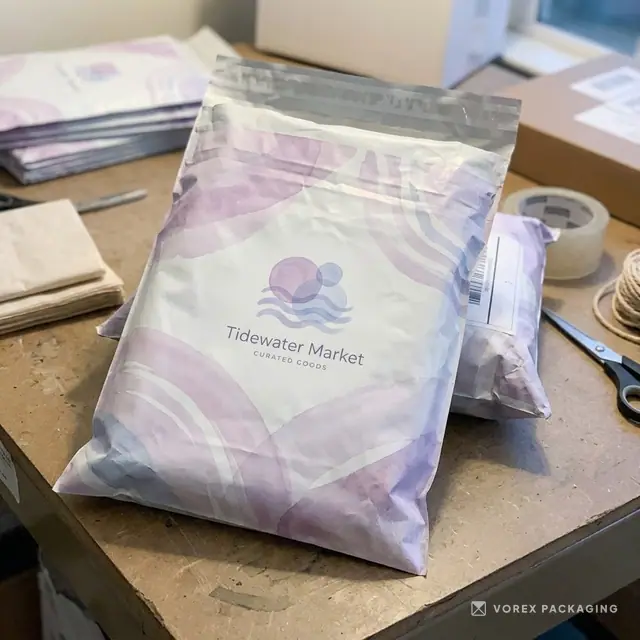
Poly mailers are sold by flat size, width x length, measured empty. Pick one by folding the item the way you ship it and measuring it: the mailer's width must be at least the item's width plus its thickness, and its length at least the item's length plus its thickness, with room for the seal. Our listed custom poly mailer is 10 x 12 in (about 25.4 x 30.5 cm), printed full colour on one side; other sizes are made to your measurements.
The short answer
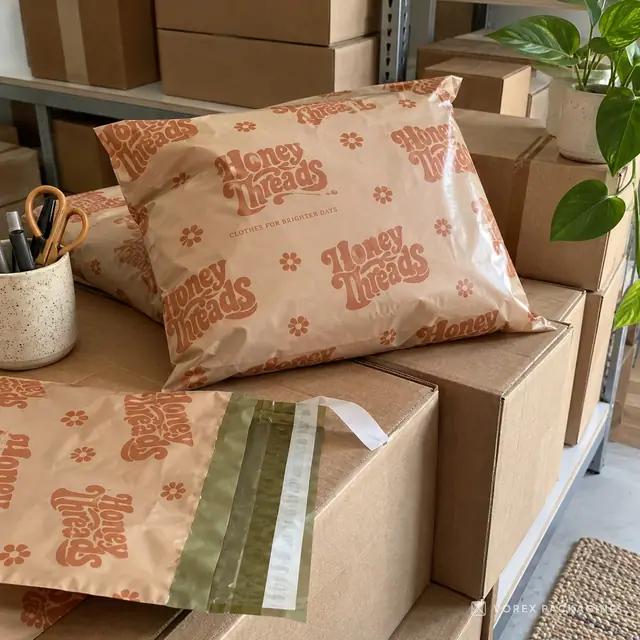
Poly mailers are sold by their flat size, width x length, measured with the mailer empty and lying flat, not counting the seal flap. To pick one, fold the item the way you pack it, measure it, then check two sums: the mailer's width must be at least the item's width plus its thickness, and its length at least the item's length plus its thickness, with a little room on top for the seal. Our listed custom poly mailer is 10 x 12 in (about 25.4 x 30.5 cm), co-extruded polyethylene with a self-seal strip, printed full colour on one side, available as a single printed mailer to test the fit and in 250, 500 and 1,000 packs. Any other size is made to your measurements, with no minimum order.
How poly mailer sizes are written
A size such as 10 x 12 in means the mailer is 10 in wide and 12 in long when it lies flat and empty. The first number is the width (the side with the opening), the second is the length from the bottom fold to the opening. The adhesive flap usually sits above that, so check whether a supplier quotes the size with or without the flap; we quote the usable inside area and show the flap on your digital proof.
A flat mailer has no depth printed on it, because it has none until you fill it. Every bit of thickness you put inside uses up some of the width and some of the length. That is why an item that measures exactly 10 x 12 in will not fit a 10 x 12 in mailer, and why a mailer that looks generous for a folded tee can be tight for a hoodie.
How to measure an item for a poly mailer
- Pack it the way you ship it. Fold the garment the way you will send it, with tissue, a packing slip and any card or sticker you add. If you sell several sizes, measure the largest one.
- Measure the footprint: length and width of the folded bundle at its widest points.
- Measure the thickness: lay something flat on top and measure the height without pressing down.
- Add the thickness to both sides: mailer width at least item width + thickness, mailer length at least item length + thickness.
- Add room for the seal on the length, so the strip closes flat on the film instead of on the item, and a little on the width so the item slides in without stretching the film.
Our guide on how to measure a box uses the same idea of measuring the packed product, not the product on its own.
Worked example: a box inside a poly mailer
A buyer asked us this week about shipping a slim product box of about 6 x 1.75 x 11.5 in in a poly mailer, and said a standard size looked too tight because of the box's thickness. The sums show why:
- Width: 6 in + 1.75 in thickness = 7.75 in, plus room to slide it in, so a mailer around 9-10 in wide.
- Length: 11.5 in + 1.75 in thickness = 13.25 in, plus room for the seal, so a mailer around 15 in long.
A 10 x 12 in mailer is too short for that box; something close to 10 x 15 in fits, which is what the buyer suggested. Boxes and other rigid items need this check most, because they do not squash to fit the way a folded shirt does.
Poly mailer size chart by what you ship
These are starting points to measure against, not standard sizes. Folds, fabrics and brands differ, so test one mailer with your real product first.
| What you ship | What to measure | Where to start |
|---|---|---|
| One folded t-shirt, leggings, a scarf | the folded tee with tissue | our listed 10 x 12 in mailer usually suits a flat fold; check thickness |
| Shirts and blouses for clothing brands | the folded shirt on its card, plus packing slip | 10 x 12 in for slim folds; a longer mailer for dress shirts on a backing card |
| Hoodies, sweatshirts, sweaters | the folded garment, which is often 2-3 times thicker than a tee | made to size: add the full thickness to width and length |
| Jeans and pants | folded in thirds or quarters, with the waistband | made to size, wider than a tee mailer |
| Jackets and bundles of 2-3 items | the whole bundle, compressed only as much as it stays | made to size, or a mailer box |
| A small product box (shoes, cosmetics, gifts) | the box's length, width and height | width + height and length + height, then add seal room (see the example above) |
Inches convert to centimetres at 1 in = 2.54 cm, so 10 x 12 in is about 25.4 x 30.5 cm. You can send measurements in either unit.
One size or two?
Choose the main size from your most common order, not your largest. A mailer that is too big lets the item slide and wrinkle and makes the parcel look half empty; one that is too small strains the seal. Many clothing brands cover most orders with two sizes: one for single items and one for hoodies or bundles. One printed design can run across both sizes, which keeps the brand consistent and the artwork work small.
Can you ship a box in a poly mailer?
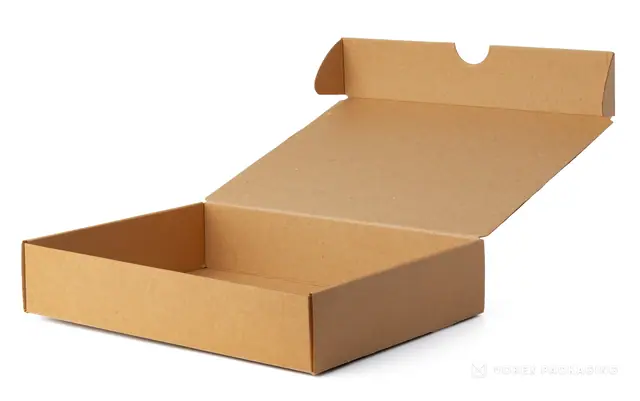
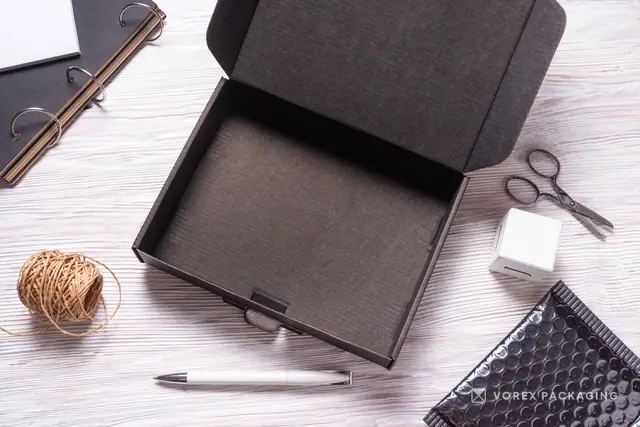
Yes, if the box is sturdy enough on its own and the mailer is sized for the box's thickness, as in the worked example. The poly mailer keeps out dirt and rain and carries your logo; it does not add crush protection. Fragile items, glass and anything that needs padding belong in a bubble mailer or a corrugated mailer box instead. Our comparison of a mailer box vs a shipping box helps if you are deciding between box types.
Poly mailer sizes and USPS
For postage, the carrier measures the parcel as it is mailed, filled, not the flat mailer. Most apparel mailers are small and light, far under the USPS size and weight limits; the details, with the USPS Domestic Mail Manual sections they come from, are in our guide to mailer box sizes and USPS limits. UPS and FedEx set their own rules, so check the carrier you use. Shipping is free on every order from us.
Film, print and closure options that affect fit
- Film: co-extruded polyethylene with an opaque inner layer so contents stay private; matte or gloss surface. Thicker films hold their shape better but change how much a mailer stretches, so tell us the film you want when you send sizes.
- Closure: a peel-and-seal strip; a second return strip with a tear line is available for brands that accept exchanges, and it needs a little extra length.
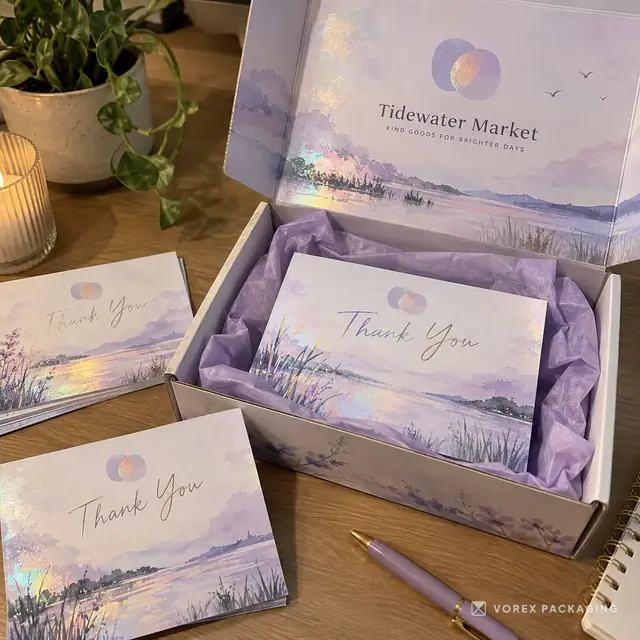
- Print: our listed mailer is printed full colour on one side. Keep a clear area for the shipping label; the proof marks it.
- Inside the mailer: printed tissue paper, stickers to close the tissue and thank-you cards all add a little thickness, so include them when you measure.
- Paper or compostable instead of plastic: see compostable mailers; recycling access for plastic film varies by area.
Checklist before you order
- Pack your most common order and your largest one, with tissue and inserts.
- Measure width, length and thickness of each.
- Add the thickness to width and length, and add room for the seal.
- Pick one or two sizes; test with a single printed mailer if 10 x 12 in might fit.
- Send the sizes, film, print and closure in a quote request; we send a digital proof before anything prints. Every order includes free digital design and dieline.
Shipping clothing? Our guide to packaging clothing for shipping covers folding and inserts, and shirt box sizes helps when a retail box is the better choice. More apparel packaging is on the apparel and fashion page.