














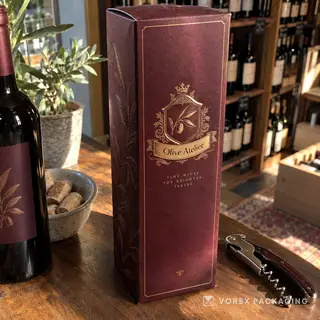


How to Package Clothing for Shipping: Poly Mailer or Box?
Updated · Vorex Packaging
Fold the garment to a consistent size, protect it with a clear bag or tissue, and ship it in the smallest package it fits without being crushed: a poly mailer for soft items such as t-shirts and leggings, or a mailer box (or a shirt box inside an outer mailer) for pressed, premium or gift pieces. Seal every seam, put the label flat on the largest side, and test-pack one order before you buy a full run.
The short answer
Fold the garment neatly, put it in a clear bag or wrap it in tissue so it stays clean and dry, then ship it in the smallest package it fits without being crushed. For t-shirts, leggings, socks and other soft items that cannot break, a poly mailer is usually enough: it is light, it seals itself, and it does not add bulk you pay to ship. For anything that should arrive pressed and presentable (a dress shirt, a gift, a premium piece) use a box: a mailer box that ships on its own, or a shirt box inside an outer mailer. Seal every seam, put the label flat on the largest side, and test-pack one order before you buy a full run.
Poly mailer or box: how to choose
| Item | Usual choice | Why |
|---|---|---|
| T-shirts, hoodies, leggings, socks, swimwear | Poly mailer | Soft goods cannot break and fold flat, so a light self-seal envelope protects them from dirt and rain without adding size. |
| Dress shirts, blouses, knitwear you want to arrive pressed | Shirt box inside a mailer, or a mailer box | A rigid shape stops the fold from being crushed or creased in transit. |
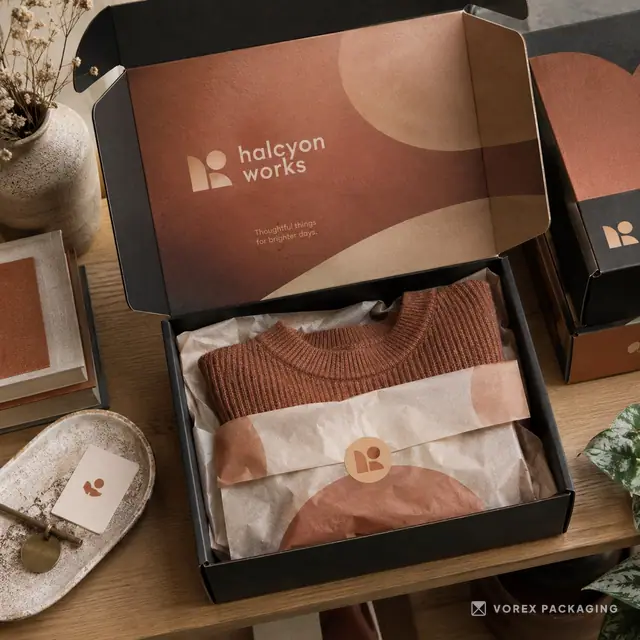
| Gifts, bundles, launch drops, subscription orders | Printed mailer box | The box is the unboxing moment; tissue, a card and a sticker seal go inside. |
| Caps, hats, structured bags | Box with enough height | A crown or a structured shape needs space on every side, not a flat envelope. |
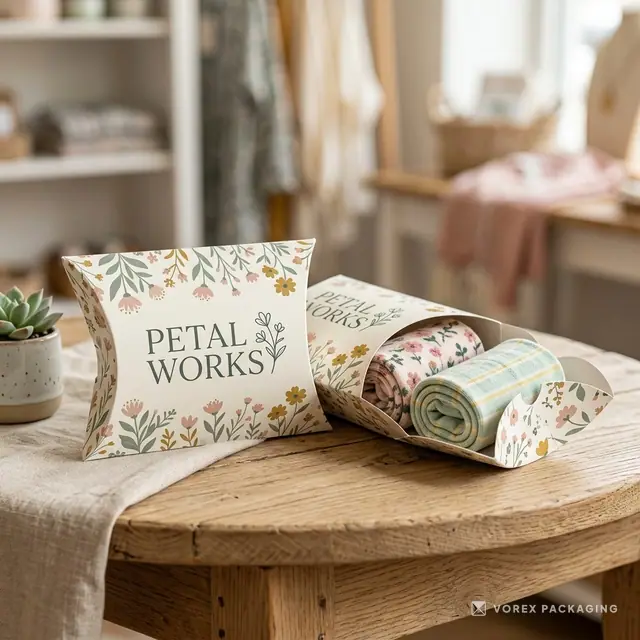
| Boutique counter or in-store pick-up | Pillow box, apparel box or a bag | No courier handling, so presentation matters more than strength. |
Step 1: fold to a consistent size
Pick one fold for each product and teach it to everyone who packs. A folded adult t-shirt that is the same size every time means one mailer or box size covers the whole line, and you can order that size in a run instead of buying several. Fold on a clean surface, button shirts first, and put any loose hang tag where it will not dent the fabric. If you sell several sizes (S to XXL), fold the largest one, measure it, and size the packaging to that, so the small sizes still fit without moving around too much.
Measure the folded garment's length, width and thickness. Our guide on how to measure a box explains inside and outside dimensions, so you compare the right numbers.
Step 2: protect the garment inside
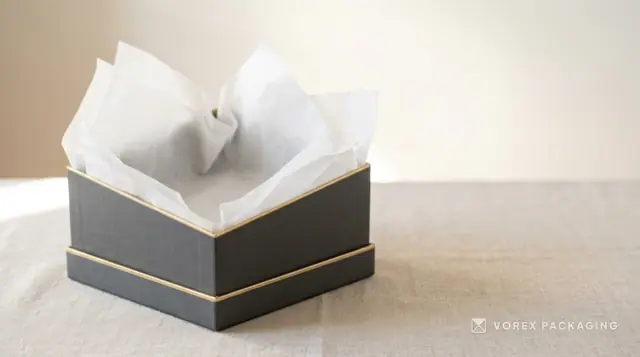
- Clear bag or tissue. A clear polybag keeps out dust and moisture; printed tissue paper does the same job with your logo on it and makes the order feel like a gift. Our listed tissue sheet is 20 x 30 in, printed in one color.
- A card or board for shirts. A flat card behind a folded dress shirt keeps the collar and placket square.
- A thank-you card and the return note. Put them on top so they are the first thing the customer sees.
- A sticker to close the tissue. A small logo sticker holds the wrap shut and carries the brand.
Step 3: pick the shipping package
Poly mailers for soft goods
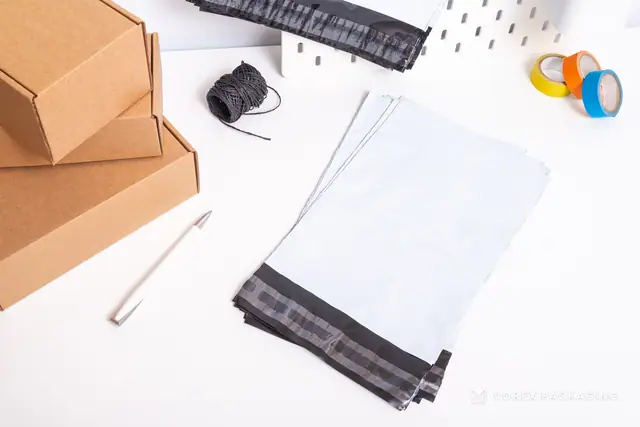
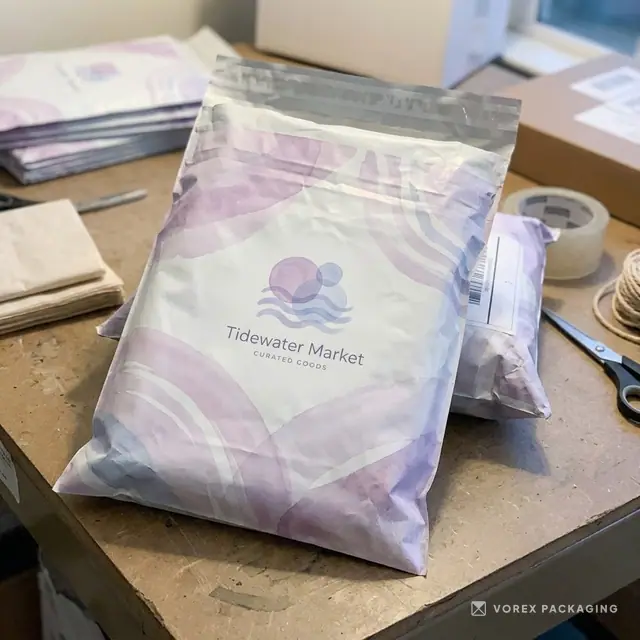
Poly mailers are printed plastic envelopes with a self-seal adhesive strip. They are the lightest option, which keeps postage down, and they cannot be crushed in the usual sense because there is nothing rigid to dent. Choose a size that closes with a little room: too tight and the seal strains, too loose and the garment slides. Our listed 10 x 12 in poly mailer pack (co-extruded polyethylene, printed full color on one side) suits a folded t-shirt or a pair of leggings; a hoodie or a bundle needs a bigger custom size. Ask for an opaque inner layer if the garment should not show through, and a second adhesive strip if customers often send items back.
Boxes for pressed, premium or gift items
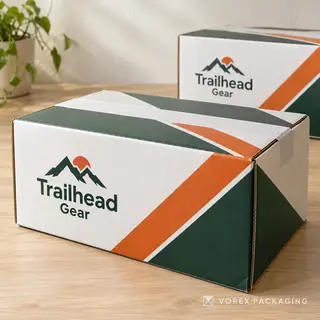
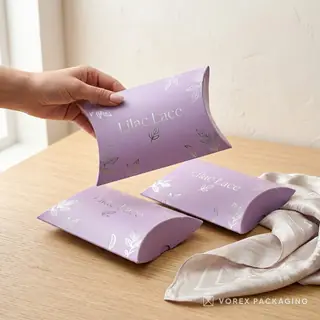
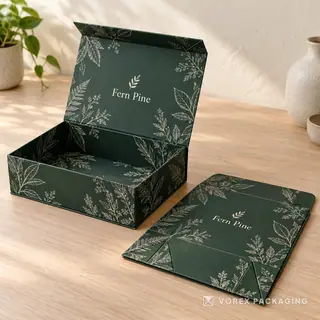
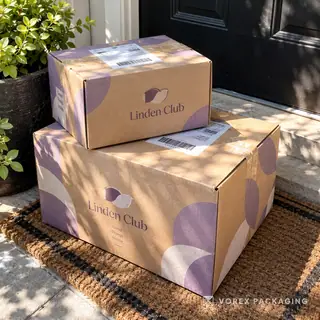
A mailer box is corrugated, closes with a tuck front and can travel on its own with the shipping label on the lid. A shirt box is a shallow paperboard box (our listed pack is a 14 x 10 x 2 in two-piece lid and base in SBS paperboard, printed full color outside). It is made for presentation, so for shipping put it inside an outer mailer or a corrugated box rather than labelling it directly. For a store counter or a lighter gift, an apparel box (12 x 10 x 2 in lid and base on our listed single piece) or an apparel pillow box for scarves, socks and accessories works well.
Step 4: seal and label it
USPS's packing guidance says to use "enough 2-inch-wide packing tape to close and secure all seams", and to place a shipping label "parallel to the longest side of the package", with all labels on the same side and none folded over an edge (USPS, How to Package and Ship, read 24 October 2026). On a poly mailer, the self-seal strip replaces the tape; press it down along the full length. Keep the label away from the seal and from any fold.
Size also sets the price of postage. Our mailer box sizes and USPS limits guide checks common box sizes against the USPS weight, length-plus-girth and dimensional weight rules, so you can see where a slightly smaller box saves money.
What the garment and its package must say in the US
Clothing sold in the US carries labels under FTC rules. The FTC's guide to the Textile and Wool Acts lists three required disclosures: the generic fiber names and percentages by weight, the country where the product was processed or manufactured, and the company name or Registered Identification Number (RN) of the business marketing it. Care labels come from a separate FTC rule (Care Labeling of Textile Wearing Apparel, 16 C.F.R. Part 423).
The packaging point many small brands miss: for products sold in packages, the FTC guide says the required information "must be on each item in the package and on the package", but if the package is transparent and the label can be read without opening it, the package does not need its own label (FTC, Threading Your Way Through the Labeling Requirements, read 24 October 2026). That matters for retail packs such as sock bundles or boxed underwear sold on a shelf. It is general information, not legal advice: check the FTC guide for your own products.
Make the unboxing part of the brand
Once the order is protected, small touches do the branding: printed tissue, a sticker seal, a hang tag with the care and fit notes, and a box or mailer printed inside as well as outside. Our article on the unboxing experience covers how small brands plan this without overspending, and packaging for Etsy and Shopify sellers covers the basics of buying packaging for an online shop. Browse the full apparel and fashion packaging range for caps, shoes, swimwear and accessory boxes.
Test one order before you buy a run
Pack a real order with your real garment, tissue and card, close it and weigh it. Check that the seal closes without strain, nothing slides around, and the package is not bigger than it needs to be. When you are ready, request a quote with the folded size of your largest garment and the quantity you need.
Box sizes in this guide
Each size has its own page with the box styles and products at that size, a dieline and a quote form with the size filled in.