









Matcha Packaging Ideas: Tins, Pouches, Cups and Gift Sets
Updated · Vorex Packaging
The best matcha packaging keeps oxygen, light and moisture away from the powder: a metal tin or a resealable light-blocking pouch, often inside a printed retail box. Add stick-pack boxes for trial sizes, whisk and gift set boxes with fitted inserts for kits, and printed cups, sleeves and carriers if you serve matcha drinks.
What does matcha packaging need to do?
Matcha is a very fine powder, which makes it easy to ship and hard to keep fresh. Every piece of packaging a matcha brand or matcha bar buys does one of three jobs: it protects the powder, it sells the product on a shelf or in a feed, or it carries a drink from the counter to the customer. Good matcha packaging ideas start by naming which job each piece does, then choosing the format that does it best. Our matcha packaging hub lists every format we make; this guide explains how to choose between them and how they fit together.
Why matcha is harder to package than most teas
Loose-leaf tea has some protection built in: the leaf is whole. Matcha is the whole leaf ground to a powder, so far more of it is exposed to air. Light and warmth add to the problem. In a study published in Japan's Tea Research Journal (Haraguchi et al., 2002, “Effects of Storage Conditions on Quality of Matcha”), researchers stored sealed bags of matcha at four temperatures and measured chlorophyll, vitamin C, surface color and the oxygen in the bag. Matcha kept at 4°C or below stayed in good condition for 24 weeks, matcha at 25°C stayed in moderate condition over the same period, and matcha at 37°C turned fairly bad within 3 to 4 weeks. The authors linked the changes to oxygen being used up inside the bag at higher temperatures.
For packaging, the lessons are simple. Keep oxygen and light out, keep the pack resealable so customers are not leaving the powder open, and size it so a customer finishes it while it is still fresh. Storage advice on the label (cool, dry, away from light, reseal after use) belongs on the pack too.
Matcha packaging for the powder
Tins
Custom matcha tins are the classic choice. Metal blocks light completely and a tight lift-off or hinged lid keeps out humidity between uses. Many brands add an inner plug lid or fill the tin with a sealed inner bag, so the tin does the protecting and the bag keeps the powder fresh until first use. A printed tin also stays on the kitchen counter for months, which is long-lasting brand exposure.
Stand-up pouches
Custom matcha pouches use a light-blocking metallized or foil layer in the film and a resealable zipper. They weigh far less than tins, so they suit online orders, larger cafe sizes and refills. A common pattern is to sell the tin once and the pouch as the refill.
Matcha pouch and box sets: why two layers work
A printed carton on its own looks good on a shelf but does not stop air or humidity reaching the powder, and a pouch on its own protects the powder but is harder to merchandise. A matcha pouch and box set splits the two jobs between two layers:
- The inner pouch keeps the matcha sealed. It is made from a barrier film that blocks light and moisture, and its zip-lock top reseals after every use, so the powder is not left open to the air between servings. That matters most after the first opening, when a tin lid or a folded bag top is often all that stands between the powder and the kitchen.
- The outer box does the selling. It stands upright on a shelf, stacks neatly, and gives you flat printed panels for the brand, the grade, the origin and a short whisking guide. It also adds a second layer of shade and protects the pouch from scuffs in transit.
- The sizes are matched. The pouch is sized to your fill weight and the box to the filled pouch, so it does not slide around inside.
The set suits brands that want the light weight and lower shipping volume of a pouch with the shelf presence of a carton, and customers can keep the pouch in a cupboard and recycle the box where paperboard is accepted.
Matcha pouch vs tin: which should you choose?
Both protect the powder when they close well. The choice is mostly about where and how you sell:
- Choose a tin for a premium first purchase, gift shops and retail shelves, and any product you want customers to keep and refill.
- Choose a pouch for e-commerce, subscriptions, refills and bulk cafe sizes, where weight and shipping volume matter.
- Use both when you want a premium starter product and a lighter refill, printed from the same design so they read as one brand.
Whichever you pick, send the fill weight and a sample if you have one, so the pack is sized to the powder rather than the other way round.
Matcha packaging for the shelf
Retail boxes
Custom matcha boxes wrap a tin or pouch in a printed carton. Shoppers choose matcha by grade, origin and how it is prepared, and a tuck-end box gives four panels to explain all three, plus space for a barcode. White SBS paperboard prints bright greens accurately; kraft board suits organic and minimal brands. An insert holds a round tin upright in a square carton.
Stick-pack boxes
Single-serve sticks are how many customers try a brand for the first time. Matcha stick pack boxes hold a set count of sticks for trial packs, office packs and travel packs, and a tear-away front can turn the carton into a counter display by the till.
Whisk boxes
A bamboo whisk (chasen) has dozens of thin tines that bend when they are crushed. Matcha whisk boxes use a fitted insert or a shaped cavity to hold the whisk head away from the box walls, and a die-cut window can show the bamboo without opening the box.
Matcha gift set boxes
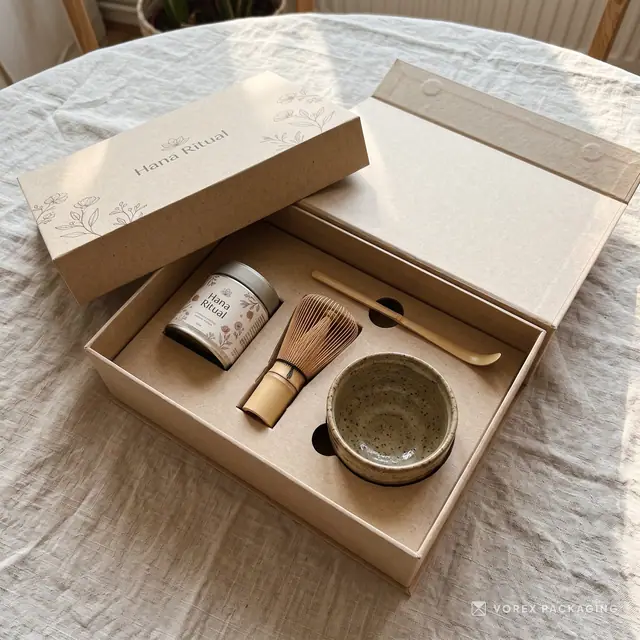
A starter kit is one of the most giftable matcha products, and it is also the hardest to pack: a round tin, a delicate whisk, a long scoop and sometimes a ceramic bowl. Matcha gift set boxes solve this with a fitted insert that gives each item its own cavity, inside a rigid box with a magnetic or lift-off lid. Our guide to custom box inserts covers how to measure each item and which insert material to choose. Gift sets are worth planning early for the holiday season; see our Christmas packaging ideas for timing.
Matcha packaging for the drink
For a matcha bar or cafe, the cup is often the most-seen piece of packaging you own, because matcha drinks get photographed and posted.
- Matcha cups: printed paper cups in single wall, used with a sleeve, or double wall, which is comfortable to hold without one, with matching lids. Ask a specialist about cold-cup options for iced matcha.
- Cup sleeves: printed bands that brand plain stock cups. Because they are separate from the cup, they suit seasonal designs and short runs without reordering printed cups.
- Cup carriers: two- and four-cup paperboard carriers cut to your cup bases, so multi-drink and delivery orders arrive upright. The sides and handle carry your logo too.
Matcha packaging design ideas
- Hold one green everywhere. Tins, pouches, cartons and cups are printed on different materials, so the same green can shift. Print every item from one color reference and check each digital proof side by side.
- Put the grade first. Ceremonial and culinary grades are bought for different uses. Make the grade the second thing a shopper reads after the brand.
- Print the ritual. A short whisking guide (amount, water, whisk) on the inside of a lid or the back of a carton helps first-time buyers and makes the box worth keeping.
- Use finishes sparingly. Foil stamping or embossing on a gift box lid feels premium; on an everyday pouch, a clean matte finish often reads calmer and more natural.
- Design the set, not the piece. If you sell a tin, a refill pouch and a gift kit, design them together so they look like one family on a shelf and in a photo.
Food-contact rules to check
Tins, pouches and inner bags touch the powder, so they are food-contact packaging. In the USA, the FDA says it is the manufacturer's responsibility to make sure each component of a food-contact material is authorized, for example by a regulation in Title 21 of the Code of Federal Regulations or an effective Food Contact Substance Notification (FDA, “Determining the Regulatory Status of Components of a Food Contact Material”, read 8 Oct 2026). In Canada, section B.23.001 of the Food and Drug Regulations prohibits selling food in packages that may impart a harmful substance to the food, and suppliers can ask Health Canada for a voluntary premarket assessment (Health Canada, “Packaging Materials”, read 8 Oct 2026). When you request a quote for anything that touches the powder, say so, and ask for the material's food-contact documentation. Outer boxes, sleeves and carriers that never touch the powder directly are a separate question.
How to get a quote for matcha packaging
Send the list of items you need (for example a tin, a refill pouch and a retail box), the fill weight or item sizes, quantities, and your artwork or brand colors. A Vorex specialist replies with options and pricing. You can start on the quote page or see how ordering works first.
Sources: Haraguchi Y. et al., “Effects of Storage Conditions on Quality of Matcha”, Tea Research Journal (Chagyo Kenkyu Hokoku) No. 93, 2002, pp. 1-8, doi:10.5979/cha.2002.1; FDA, “Determining the Regulatory Status of Components of a Food Contact Material” (page updated 21 Feb 2018); Health Canada, “Packaging Materials” (page modified 17 Feb 2023). All read 8 Oct 2026.