









Custom Box Inserts: Types, Materials and How to Choose
Updated · Vorex Packaging
Custom box inserts are pieces of paperboard, corrugated board, foam or molded pulp cut to hold each product in its own place inside a box. Choose paperboard for light products, corrugated for heavier items that ship by courier, and foam or molded pulp for glass and electronics. Measure every product, including caps, and design the insert together with the box.
What is a box insert?
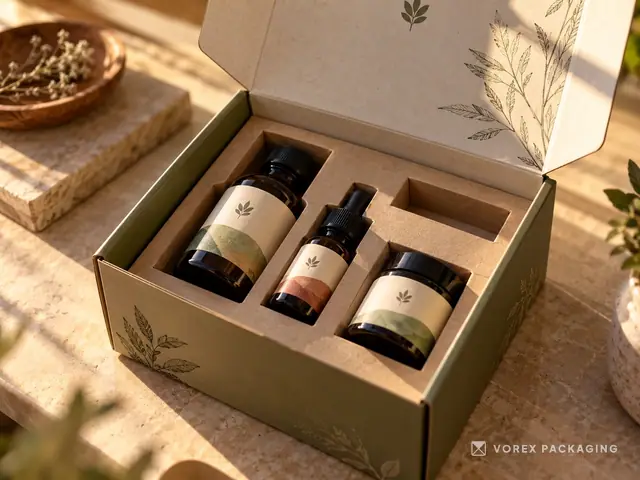
A box insert is a piece of board or foam that sits inside a box and gives each product its own place. It can be a flat platform with cut-outs, a set of slotted dividers, a folded tray with cavities, or a foam block cut to the product's shape. Our glossary entry on the insert covers the term itself; this article is about choosing one.
An insert does three jobs at once. It stops products moving and knocking into each other, it presents them in a set order when the lid comes off, and it lets you use one outer box size for a product that would otherwise rattle around in it. For gift sets, kits and anything in glass, the insert often matters more to the customer's experience than the print on the outside.
Do you need an insert at all?
Not every box needs one. A single product that already fits its box snugly, such as a soap bar in a carton sized to it, gains little from an insert. An insert earns its place when one of these is true:
- More than one item shares the box. Two bottles, a jar and a dropper, or a candle with matches will knock together without separation.
- The product is fragile or heavy for its size. Glass, ceramics and electronics need to be held away from the box walls.
- The product is an odd shape. A round jar in a square box, or a bottle with a narrow neck, needs support to stay upright.
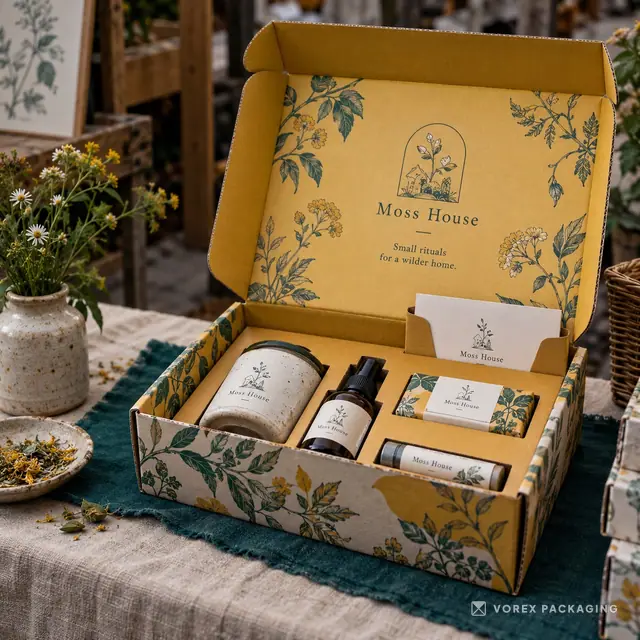
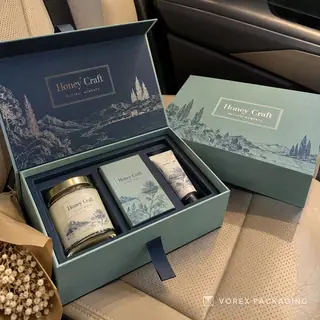
- Presentation is part of the product. Gift sets, PR boxes and premium rigid boxes are judged on how the contents look when opened.
If none of these apply, a well-sized box with a little tissue paper or crinkle fill may be enough, and it costs less to make.
The main types of box inserts
Paperboard inserts
Paperboard inserts are folded and die-cut from the same kind of board used for folding cartons, in white or kraft. They are the lightest and simplest option and they print well, so the insert can carry a logo, product names or a short message. They suit cosmetics, small bottles, candles and other light products. The glossary entry on SBS paperboard explains the white board most often used.
Corrugated inserts
Corrugated inserts use fluted board, the same material as shipping boxes, so they are stiffer and absorb more knocks. They suit heavier products, multi-item kits and anything that ships by courier in a mailer box. The trade-off is a slightly more industrial look, which many brands cover by printing the inside of the lid. Our comparison of corrugated vs paperboard goes deeper on the two boards.
Foam inserts
Foam is cut or routed to the exact outline of the product and gives the most cushioning. It is the usual choice for glass, lenses, electronics and high-value pieces such as watches. Foam comes in several types and densities, from soft polyethylene to firmer EVA, and it is often wrapped or flocked for a premium feel. Foam is harder to recycle at the curb than paper, so weigh protection against how your customers will dispose of it.
Molded pulp inserts
Molded pulp is made from recycled paper fiber pressed into a shape, the same family of material as an egg carton. It cradles bottles and irregular shapes well and is widely recyclable. It needs its own mold, so it tends to make more sense for products that will run in the same shape for a long time. Ask a specialist whether molded pulp is available for your product before designing around it.
Dividers and partitions
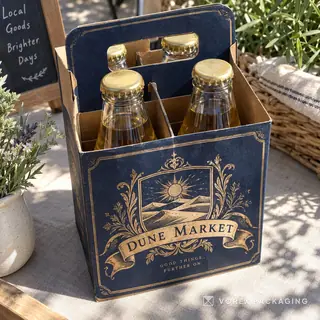
Slotted dividers are strips of board that interlock to form a grid, like the cells inside a box of glasses. They are an efficient way to separate several items of the same size, such as bottles, jars or cookie stacks, and they work with both paperboard and corrugated.
How to choose the right insert material
Start from the product and how it travels, not from the look you want. A simple way to decide:
- Light products sold in stores or handed over in person: paperboard is usually enough.
- Products shipped to customers by courier: corrugated, or paperboard inside a corrugated outer box.
- Glass, ceramics and electronics: foam, molded pulp or a deep corrugated insert that holds the item away from the walls.
- Several identical items: slotted dividers.
- A premium gift set: a wrapped paperboard platform or a flocked foam insert inside a magnetic closure rigid box.
If sustainability is part of your brand story, keeping the box and insert in the same material family, for example paperboard in a paperboard box, makes it easier for customers to recycle. Our guide to eco-friendly packaging choices covers the wider picture.
Box inserts by product type
Different products tend to land on the same few insert designs:
- Skincare and essential oils: paperboard platforms with round holes or neck holders keep dropper bottles upright, as in essential oil boxes.
- Candles: a paperboard or corrugated collar stops a glass jar from sliding in candle boxes, especially in gift sets of two or three.
- Chocolates and confectionery: cavity trays hold each piece apart in chocolate boxes; ask a specialist about food-contact materials.
- Jewelry and watches: slotted cushions or foam pillows hold the piece in place and present it in jewelry boxes.
- Kits and subscription boxes: a die-cut platform with a cavity for each item keeps the arrangement intact after a courier journey.
How to measure for a box insert
An insert is only as good as the measurements behind it. For each product, measure length, width and height at the widest points, including caps, pumps and lids. For bottles, also measure the neck diameter and where the shoulder starts if you want a neck holder. Then decide the arrangement: side by side, in rows, or with one hero product raised in the middle.
Give these numbers together with the box style, and the insert is drawn on the same dieline as the box so everything fits. Our guide on how to measure a box explains inside versus outside dimensions, which matters because the insert must fit the inside of the box, not the outside.
Design details that make inserts work better
- Finger notches. A small half-moon cut beside each cavity lets customers lift a product out instead of turning the box upside down.
- A little clearance. Cavities should be snug but not tight; a product that has to be forced in may scuff or tear the insert coming out.
- A raised platform. Lifting the insert off the box floor puts products closer to eye level when the lid opens and leaves room for a card or instructions underneath.
- Printing on the insert. Paperboard inserts can carry product names, a short welcome note or setup steps, which saves a separate leaflet.
- One sample before the full run. Test the fit with your real products, especially for glass, because bottle sizes can vary slightly between batches.
Common mistakes to avoid
The most common mistake is designing the box first and the insert afterwards. The box ends up a few millimeters off, and the insert has to compromise. Design them together. The second is measuring a product without its cap or pump. The third is choosing a decorative insert for a product that ships by courier: a beautiful paperboard platform will not save a glass bottle in a parcel network without a protective outer box.
Getting a quote for a box with an insert
Send us the box style you want (or the outside size of an existing box), the length, width and height of every product that goes inside, how many items per box, how the box will travel, and your quantity. Photos of the products help a specialist suggest a layout. You will see the insert on the digital proof before anything is made. Request a quote and a packaging specialist replies with options and pricing.