









How to Package Soap to Sell: Bands, Sleeves, Boxes and Labels
Updated · Vorex Packaging
To package soap to sell, choose the format by where you sell: a printed belly band or sleeve for market tables and bundles (light, and the bar stays visible), a die-cut window box for retail shelves, and a closed box for shipping and wholesale. Size it to a cured bar, keep room on the back for ingredients, net weight and your business details, and check whether your bar is true soap (CPSC) or a cosmetic (FDA), because that sets what the label must say.
What soap packaging has to do
Handmade soap is one of the easiest products to start selling and one of the easiest to package badly. A bar that looked perfect on the curing rack can reach a customer scuffed, sweating or smelling of the box next to it. Good soap packaging does four jobs: it protects the bar, it lets the shopper see or smell what they are buying, it carries the label information the rules ask for, and it makes the bar look like it is worth the price. The right format depends on where you sell: a craft fair table, a boutique shelf, an online shop that ships, or a wedding favor table.
This guide walks through the formats, how to size them, what to print on them and when a custom run makes sense. If you want to see the full range first, our soap packaging hub lists every style we make.
The five common ways to package a soap bar
Most small soap brands use one of these, and many use two: a light wrap for market sales and a full box for gift sets and shipping.
| Format | Shows the bar? | Protection | Best for |
|---|---|---|---|
| Belly band | Yes, most of it | Low | Market tables, bundles, favors |
| Soap sleeve or holster | Yes, the ends or a window | Medium | Boutique shelves, light shipping |
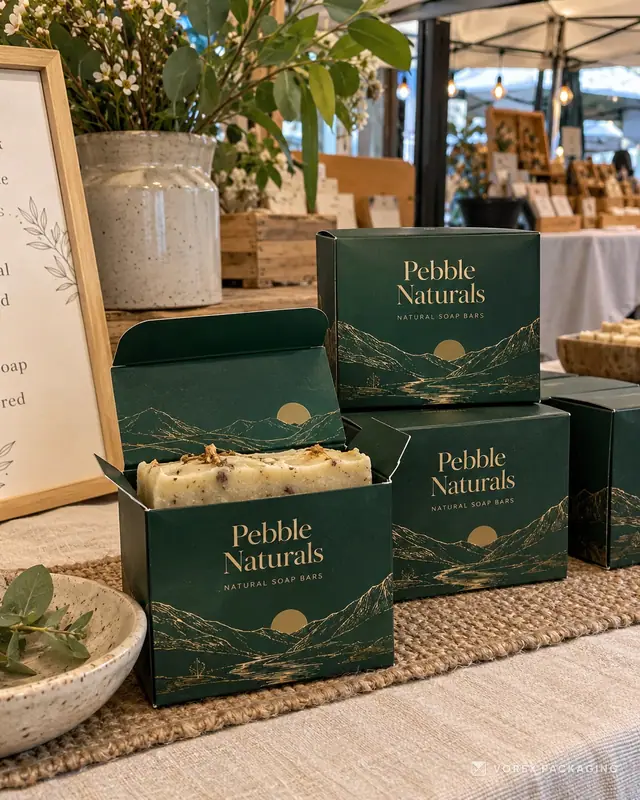
| Die-cut window box | Through the shaped window | Medium-high | Retail, swirled and botanical bars |
| Closed tuck-end soap box | No (print the photo or color) | High | Shipping, wholesale, gift shops |
| Gift set box with an insert | When opened | Highest | Holiday sets, corporate gifts |
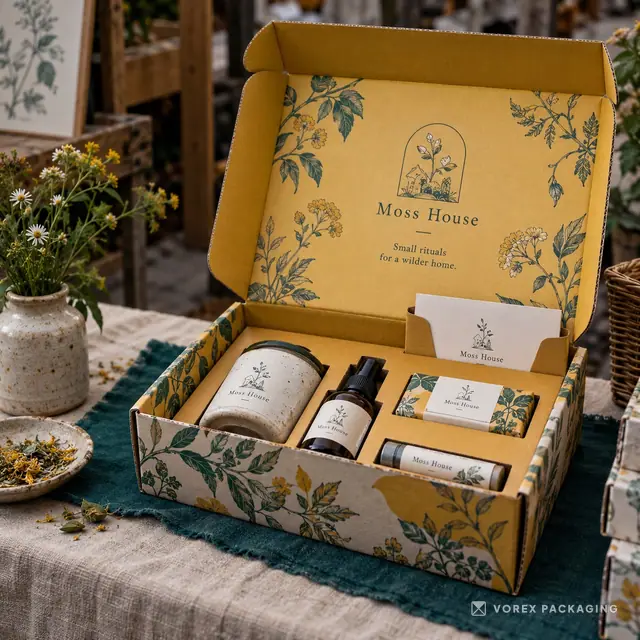
A belly band is a printed paper strip that wraps around the middle of the bar. It is the lightest option and lets the soap's color and scent sell it, which is why so many makers start there. A sleeve or holster slides over the bar and covers more of it, with open ends or a die-cut window. A window box fully encloses the bar but keeps a shaped opening, while a closed box gives the most protection and the most print area. For sets of three or four bars, a tray and sleeve box or a two-piece box with a custom insert keeps each bar in its place.
Measure the bar, then size the packaging
Every soap format is made to the bar, so measure before you design anything. Measure length, width and thickness of a finished, cured bar, not a fresh one: bars lose water while they cure and can shrink slightly. Measure several bars from the same mold and use the largest, because handmade bars are rarely identical. If your bars are rounded, domed or stamped, measure at the widest and thickest points.
- Bands: the length is the bar's full wrap (two widths plus two thicknesses) plus an overlap for the glue or tab; the band height is a design choice, usually wide enough for your logo and scent name.
- Sleeves and holsters: the inside size matches the bar's width and thickness closely so the sleeve grips without crushing the edges.
- Boxes: the inside size is the bar plus a little clearance so it slides in and out; the board thickness then sets the outside size.
Our free dieline generator turns those measurements into a print-ready template; the sleeve and reverse tuck end templates are the ones soap makers use most. Our guide on how to make a dieline explains the allowances step by step.
What to print: the label rules in the US
What your label must say depends on how the US regulators classify your bar, and that depends on what it is made of and what you claim. According to the FDA's soap FAQ, a product counts as "true soap" when it is made mainly of alkali salts of fatty acids, those salts do all the cleaning, and it is labeled and sold only as soap. True soap is regulated by the Consumer Product Safety Commission, not by the FDA.
The same FAQ explains the two ways a bar stops being true soap. If it is made with synthetic detergents, or if you market it with cosmetic claims such as moisturizing or deodorizing, it is regulated as a cosmetic, with the FDA's cosmetic labeling rules (a statement of identity, the net quantity, an ingredient list and your business name and place, all set out in 21 CFR part 701) and, under the Modernization of Cosmetics Regulation Act of 2022, facility registration and product listing. If you claim it treats acne, eczema or kills germs, it is a drug. Read the FDA's Frequently Asked Questions on Soap (fda.gov, read 18 Oct 2026) for the full wording and check your own product with it; we print what you supply and cannot give legal advice. Selling in Canada too? Our Canadian labelling basics page covers the bilingual and net quantity points.
In practice, plan room on the back or underside for the ingredient list, net weight and your business details, and keep the front for the brand, the scent and one line on what makes the bar different. On a belly band that usually means the inside or back panel; on a box, a side panel. If you would rather keep the band clean, a small printed label on the bar wrap or box bottom can carry the details.
Kraft or white, window or closed?
Kraft board suits natural, vegan and cold-process brands: it looks unbleached and takes one-color black or white printing well. White SBS board prints bright full color and photos, which suits fragrance-led and gift lines. Our kraft vs white boxes comparison goes deeper, and kraft soap boxes shows the natural range.
A window or open-ended format lets shoppers smell the soap at a market and see the swirls, which often does more selling than any print. A closed box is the safer choice when bars ship, when they sit next to other scented products, or when you sell through shops where bars get handled all day. Many makers do both: open bands or holsters at the market table, closed boxes for the online store and wholesale.
Packaging soap for shipping
Wrapped bars travel well, but they still need a snug outer box. Ship single bars and small orders in a mailer box sized close to the contents, with paper fill or an insert so bars do not slide and scuff. For hot months, keep the parcel out of direct sun and avoid long waits on a doorstep where you can, because some soaps sweat in heat and humidity. Our holiday shipping guide covers box sizing and the 2026 carrier deadlines if you sell soap gift sets for Christmas.
Making it look worth the price
Soap is often bought as a gift, so small touches pay off: a foil-stamped logo on a kraft band, a die-cut window in a leaf or logo shape, a branded sticker to seal tissue in a gift set, or a printed tissue paper wrap inside a box. Keep the design system the same across scents and change only the color or the scent name, so a shelf of your bars reads as one brand.
Ready-made pack or a custom run?
If your bars fit a standard size, a fixed ready-made pack is the quickest route. Our soap box pack (3.5 x 2.5 x 1.25 in, full color) covers a common rectangular bar, and the 3 x 3 in roll labels pack handles ingredient and seal labels. For any other size, a band, a sleeve or a set box, send your bar size and artwork and a specialist replies with pricing. Custom orders start from 50 pieces.