













Mylar Bag Sizes: A Chart for Coffee, Snacks, Tea and Powders
Updated · Vorex Packaging
Mylar bag sizes are given as width x height x bottom gusset in inches, and the right size depends on your product's density more than its weight. Common stand-up pouch sizes run from about 4 x 6 in (1-4 oz) through 6 x 9 + 3 in (around 8-12 oz of granular product) to 8 x 12 + 4 in (1.5-2 lb), but published charts disagree, so fill a test bag with your real product before printing a full run.
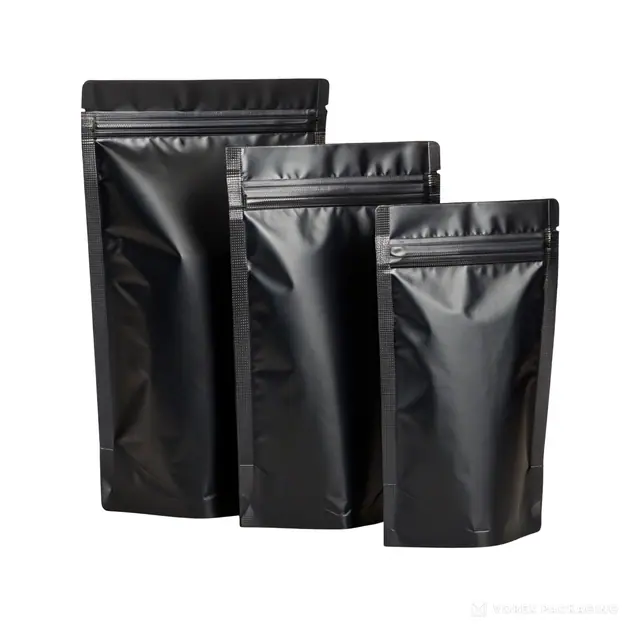
Why there is no single mylar bag size chart
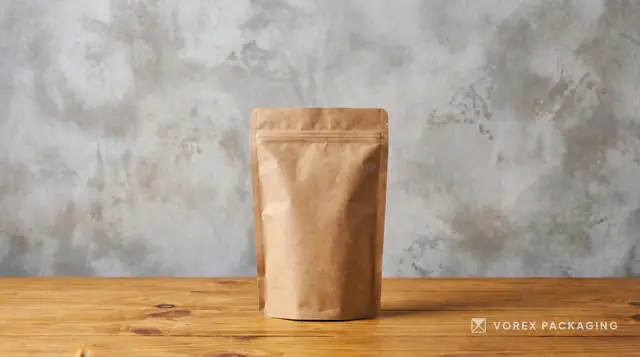
Mylar bag sizes are written as width x height x bottom gusset, in inches, with the gusset being the fold at the bottom that opens out so a stand-up pouch can stand on a shelf. What fits inside depends far more on the product than on the label weight: 8 oz of finely ground coffee takes much less room than 8 oz of granola, puffed snacks or loose-leaf tea. That is why every published chart gives a range rather than one number, and why two charts rarely agree. If you are ready to order, our custom mylar bags page lists every shape, film and closure we print, and the two stand-up pouch packs at 6.5 x 8 x 2.5 in and 7 x 9 x 3 in are the sizes we list with a fixed price.
Below are the common sizes, the fill ranges two published supplier charts give for them, and a simple way to check the size with your own product before you print a full run.
Mylar bag sizes chart: common stand-up pouch sizes
We read two published stand-up pouch size guides on 23 October 2026 (guide A, dated 11 May 2026, and guide B). Their sizes are close but not identical, so the table pairs each common size with what each guide says it holds. Treat these as starting points, not promises.
| Size (W x H + gusset, in) | Guide A: granular / whole | Guide A: powder | Guide B: granular / whole (nearest size) |
|---|---|---|---|
| 3.5 x 5.5 + 2 | 1-2 oz | 2-3 oz | not listed (B lists 3 x 5 x 2 for about 50 g of powder) |
| 4 x 6 + 2 (B: + 2.5) | 2-4 oz | 3-5 oz | 30-60 g (about 1-2 oz) of candy, nuts or treats |
| 5 x 8 + 2.5 (B: + 3) | 4-8 oz | 6-10 oz | 85-150 g (about 3-5 oz) of coffee beans, dried fruit or granola |
| 6 x 9 + 3 (B: + 3.5) | 8-12 oz | 10-16 oz | 225-300 g (about 8-10.5 oz) of snacks, pet treats or coffee beans |
| 7 x 11 + 3.5 (B: 7 x 11.5 + 4) | 16-24 oz | 20-32 oz | 340-450 g (about 12-16 oz) of granola, nuts or larger snack packs |
| 8 x 12 + 4 (B: + 4.5) | 24-32 oz | 32-48 oz | 500-625 g (about 18-22 oz) of bulky snacks or pet treats |
| 9 x 13 + 4 | 32-48 oz | 48-64 oz | not listed |
| 10 x 15 + 4.5 | 48-80 oz | 64-96 oz | not listed |
Ounce conversions from grams are ours, rounded. Notice how far apart the two guides are for the same pouch: at 5 x 8 in, guide A says 4-8 oz of granular product, guide B says about 3-5 oz of coffee beans or granola. Guide A names 6 x 9 + 3 in as the most popular size and says it holds 8 oz of most granular products. Guide B makes the key point in one line: 250 g of fine powder packs down tightly, while 250 g of granola has flakes, nuts and air gaps, so the same label weight needs more space.
Where our two listed pouch sizes fit
Our stand-up pouch packs are printed full color on a white barrier laminate film with a reclosable zipper:
- 6.5 x 8 x 2.5 in sits between the 6 x 9 and 5 x 8 rows: a little wider than 6 x 9 but shorter, with a smaller gusset. Think of it for small retail and sample-to-shelf sizes of dense products such as ground coffee, powders and candy. See the 500-piece and 1,000-piece packs.
- 7 x 9 x 3 in is a 6 x 9 + 3 in pouch made one inch wider, so it suits the most common retail fills plus bulkier products such as whole beans, loose tea, snacks and treats. See the 500-piece and 1,000-piece packs.
Any other width, height or gusset is made to order on the mylar bags page: send your product, fill weight and size and a specialist replies with a price and a digital proof.
How to work out the right size for your product
- Weigh and measure what you actually sell. Fill a bag you already have, or a measuring jug, with one retail portion. Note the volume, not just the weight.
- Leave headspace for the zipper and seal. The zipper and the heat seal sit across the top of the bag, so the usable height is less than the bag height. Product filled right up to the zipper makes the bag hard to seal and close.
- Remember the gusset counts. A pouch only stands when the bottom gusset opens out. A bag filled too low may not stand; one that is overfilled bulges and hides the front print.
- Match the front panel to your label. The front of a 4 in wide bag has very little room for a logo, product name and net weight. If your design is busy, go a size up or move details to the back panel.
- Test with a real bag. Because published charts disagree, the most reliable check is a physical one.
Stand-up, flat or gusseted: which shape?
| Shape | How it sits | Typical use |
|---|---|---|
| Stand-up pouch (bottom gusset) | Stands on a shelf | Coffee, tea, snacks, powders, treats in retail |
| Flat three-side-seal pouch | Lies flat or hangs on a peg | Samples, single servings, small dense products, mailers |
| Side gusset bag | Tall, narrow, box-like when full | Larger coffee bags and bulk fills |
| Die-cut shape | Usually flat, cut to a custom outline | Candy and novelty products; see die-cut mylar bags |
For a product people want to see, a clear front helps: clear mylar bags come fully clear or with a clear front and a printed back. A window lets light in, so light-sensitive products are usually better in an opaque or metallized film. If you are still deciding between a pouch and paper, our mylar bags vs paper bags comparison lays out the barrier and cost trade-offs.
Common sizes by product
- Coffee: retail coffee is usually sold in 8 oz, 12 oz and 1 lb bags. Whole beans are bulkier than ground coffee, so the same weight needs a bigger bag; fresh-roasted coffee often needs a one-way degassing valve (ask a specialist). Matching cartons are on our coffee boxes page.
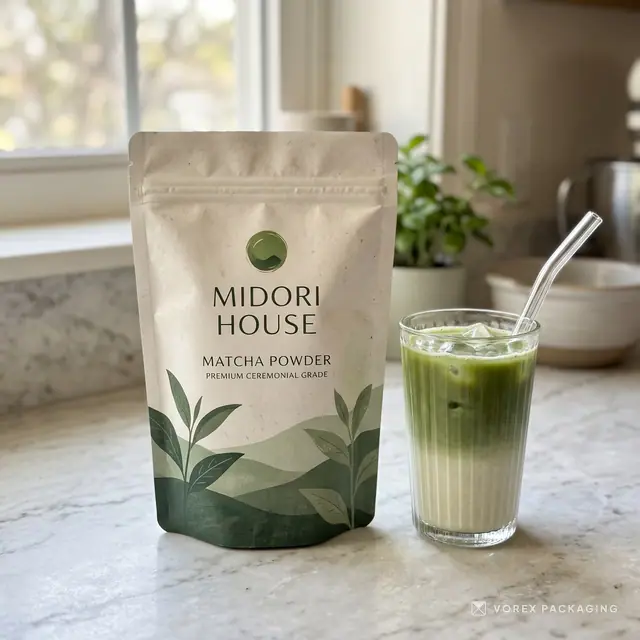
- Tea and matcha: loose-leaf tea is light and bulky, matcha powder is dense. Our matcha pouches page covers powder pouches and sets; boxed tea is on tea boxes.
- Candy and snacks: small 4 x 6 in pouches suit sample and impulse sizes; larger snack bags move up to the 6 x 9 and 7 x 11 in rows. See candy and chocolate packaging.
- Supplements and powders: dense powders fill the lower end of each size range. See supplements packaging.
What goes on the bag in the US
Packaged food sold in the US carries a statement of identity and a net quantity on the principal display panel, plus the ingredient list, nutrition facts (unless exempt), allergen information and the name and place of business of the manufacturer, packer or distributor, as the FDA's Food Labeling Guide sets out. Plan the front and back panels around that before you pick the smallest size. If the bag front is too small for everything, a printed label or sticker on a plain pouch is a lower-cost way to start with several flavors.
Ready-made pack or a custom size?
If one of our two listed sizes fits your product, the packs are the quickest route: the spec and price are fixed and you only upload artwork. For any other size, film, window, valve or finish, use the quote form with the bag size from your test fill. Either way you approve a digital proof before anything is printed, and production is fast once you approve it.