













Holiday Markets for Makers: Packaging Candles, Soap and Treats
· 37 min · The Vorex Packaging Podcast
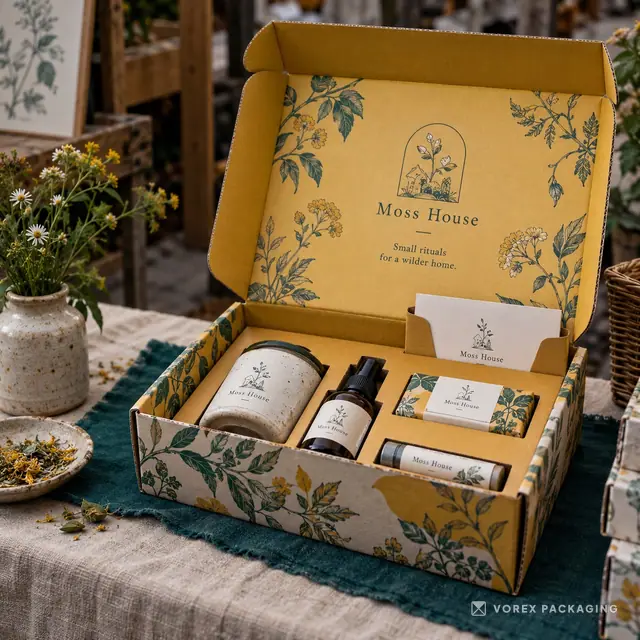
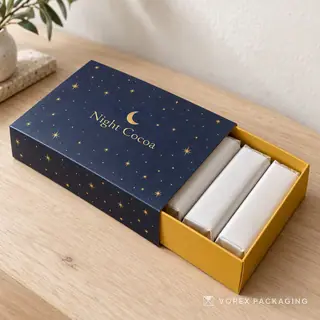
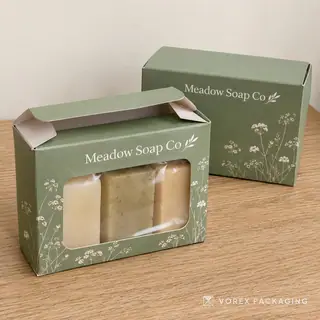
In episode nine, part of our Thanksgiving and holiday run, Maya and Jordan talk about packaging for makers who sell candles, soap and treats at holiday markets and craft fairs. US Thanksgiving is Thursday, November 26, 2026, Black Friday is November 27, and Small Business Saturday is November 28. We cover why the gift season matters (the National Candle Association reports that about 35 percent of candle sales happen in the Christmas and holiday season); how Christmas markets came to US cities; a market table that sells finished gifts (one repeated look, height, scent names on top, hang tags, bags and tissue, weather); candles (box sizing, inserts, dust covers, front and warning labels with the NCA's three safety rules, kraft or full color, shipping after the market); soap (bands, sleeves, holsters, die-cut and closed boxes, oil marks, and the FDA's explanation of when a product is soap, a cosmetic or a drug); treats (window boxes, grease and freshness, the FDA's nine major allergens, state cottage food rules); two real stories, Burt's Bees, which began with beeswax candles and a junior high school craft fair in Maine, and Dr. Bronner's text-heavy soap labels; gift sets and small gifts; counting packaging for a season of markets; and whether to use the same packaging at the market and online. Not legal advice: check the rules for your product and state.
Player not loading? Spotify's player isn't available in every country. Open the episode on Spotify, or read the full transcript below.
In this episode
- US Thanksgiving is Thursday, November 26, 2026; Black Friday is November 27; Small Business Saturday is November 28.
- The National Candle Association reports that about 35% of candle sales happen in the Christmas and holiday season, and 76% of candle buyers see a candle as an appropriate holiday gift.
- At a market table, repeat one box style and one look, lift products up, put scent or flavor names on the top panel, and hand every sale a bag.
- Keep the box in your year-round brand design and add the holiday part with stickers, belly bands or hang tags.
- Candle warning labels: the NCA's three rules are burn within sight, keep away from combustibles, keep away from children.
- Soap: the FDA says true soap is regulated by the CPSC, but claims like moisturizing or deodorizing make a product a cosmetic, and germ-killing claims make it a drug. Check every claim word before you print.
- Treats: use windows, seal food in a food-safe bag inside the printed box, and label allergens; the FDA lists nine major food allergens. Check your state's rules for home-kitchen food.
- Count packaging by product, bags by sale, and labels by scent or flavor; order early and ask about rush.
- Use the same product packaging at the market and online; add a shipping box or mailer for online orders.
Chapters
- 0:00 Cold open
- 1:31 Welcome to the show
- 3:03 Why holiday markets matter for makers
- 6:40 The market table is your shop
- 9:56 Candles: boxes, dust covers and warning labels
- 14:45 Soap: sleeves, holsters and what the label is
- 18:52 Treats: boxes, windows and allergen labels
- 22:04 Real stories: Burt's Bees and Dr. Bronner's
- 26:53 Gift sets and bundles
- 29:36 Counting and planning for a market season
- 32:10 Question: same packaging for the market and online?
- 33:57 Get started
Sources
The story segment uses public sources only. We paraphrase and state only what each source supports.
- Small Business Saturday: Small Business Saturday (Wikipedia, read 17 Nov 2026). Created and promoted by American Express; the Saturday after Thanksgiving (last Saturday in November); first observed November 27, 2010; counterpart to Black Friday and Cyber Monday; partners included the National Trust for Historic Preservation; registered trademark of American Express.
- Christmas markets in the US: Christmas market (United States section) (Wikipedia, read 17 Nov 2026). German immigrants carried Christmas market celebrations to the United States; celebrated in cities such as Chicago, Denver, Salt Lake City, Tulsa and Grand Rapids.
- National Candle Association: Facts & Figures About the Candle Industry (National Candle Association, read 17 Nov 2026). Approximately 35% of candle sales occur during the Christmas/holiday season; container and jar candles are the most popular type; candles seen as an appropriate gift for the holidays (76%) and as a hostess/dinner party gift (66%).
- National Candle Association: Understanding Candle Safety Labels (National Candle Association, read 17 Nov 2026). Every candle should include a cautionary label with three rules: burn within sight, keep away from combustibles, keep away from children; graphic icons; a missing label may mean the candle does not meet safety standards.
- FDA: Is It a Cosmetic, a Drug, or Both? (Or Is It Soap?) (U.S. Food and Drug Administration, read 17 Nov 2026). FDA's definition of soap (mostly alkali salts of fatty acids, cleaning from those compounds, labeled and sold solely as soap) and that true soap is regulated by the CPSC; cleansers that do not meet it are cosmetics or drugs; claims such as moisturizing or deodorizing make it a cosmetic, germ-killing claims a drug.
- FDA: Food Allergies (U.S. Food and Drug Administration, read 17 Nov 2026). The nine major food allergens identified by law in the U.S.: milk, eggs, fish, Crustacean shellfish, tree nuts, peanuts, wheat, soybeans and sesame.
- Burt's Bees: Burt's Bees (Wikipedia, read 17 Nov 2026). Founded in Maine in 1984; Roxanne Quimby made candles from Burt Shavitz's leftover beeswax; one-room schoolhouse rented for $150 a year; from $200 at the Dover-Foxcroft Junior High School craft fair to $20,000 in sales by the end of the first year; 1989 order for hundreds of candles from New York City boutique Zona, 40 more employees, abandoned bowling alley; incorporated 1991 (candles, soaps, perfumes, later lip balm, the best seller); acquired by Clorox in 2007.
- Dr. Bronner's: Dr. Bronner's Magic Soaps (Wikipedia, read 17 Nov 2026). Founded in the late 1940s by Emanuel Bronner, based in Vista, California; known for text-heavy labels and the many uses listed for one product (one soap advertises eighteen uses); Bronner printed his teachings on the bottles; in 1999 caramel coloring, never disclosed, was replaced with hemp oil.
Packaging mentioned
- Candle packaging
- Custom candle boxes
- Candle dust covers
- Candle gift boxes
- Soap packaging
- Soap sleeves
- Holster soap boxes
- Candy and chocolate packaging
- Hang tags
- Labels
- Thanksgiving packaging
- How it works
- Get a quote
Get a quote Try the 3D design preview
Full transcript
0:00 Maya: Jordan, picture a Saturday morning at a holiday market. It's cold, there's music somewhere, and the whole street smells like cinnamon and pine.
0:09 Jordan: I can picture it. Rows of folding tables under white tents, and people walking slowly with a hot drink in one hand.
0:16 Maya: Exactly. Now picture two candle makers, side by side. Same quality of wax, same lovely scents, same price range.
0:24 Jordan: Okay, where's this going?
0:26 Maya: The first one has candles lined up on a table cloth. Bare jars. A handwritten card with the scents.
0:32 Jordan: And the second one?
0:33 Maya: The second one has the same candles in printed boxes, with the scent name on the top, a little gift tag, and a stack of bags ready under the table.
0:43 Jordan: I think I know who sells more.
0:44 Maya: I'm not going to promise you that, because nobody measured it. But I know which table I'd walk up to if I was buying a gift for my aunt.
0:52 Jordan: The one where the gift is already done.
0:54 Maya: The one where the gift is already done. And that's today's episode.
0:58 Jordan: So today is all about makers at holiday markets. Candle makers, soap makers, and people who sell cookies, fudge and candy.
1:06 Maya: How to set up a table that sells gifts, how to package candles, soap and treats, what has to be on the label, and how to plan quantities for a whole market season.
1:16 Jordan: Plus two real stories. A candle business that started at a junior high school craft fair, and a soap company whose label became the most famous part of the product.
1:26 Maya: Welcome to The Vorex Packaging Podcast. I'm Maya.
1:29 Jordan: And I'm Jordan.
1:31 Maya: Welcome back, and welcome if this is your first episode. This show is for people who make and sell things.
1:38 Jordan: Bakers, candle makers, skincare brands, coffee roasters, online shops, and anyone who puts a product in a box.
1:45 Maya: We're in our Thanksgiving run right now. Until Thanksgiving, every episode has a Thanksgiving or holiday theme.
1:52 Jordan: Last time we talked about restaurants selling Thanksgiving dinner to go. Today we go to the other side of the season, the makers who sell at holiday markets and craft fairs.
2:02 Maya: And this is the right week for it. Thanksgiving is on Thursday, November twenty-sixth. Black Friday is the next day.
2:09 Jordan: And the day after that is Small Business Saturday, November twenty-eighth. That one matters a lot for makers, and we'll explain why in a minute.
2:17 Maya: Here's the plan. First, why the holiday market season matters so much for makers. Then the market table itself, and how packaging changes it.
2:27 Jordan: Then three chapters, one each for candles, soap and treats. Then our two stories. Then gift sets and bundles.
2:34 Maya: Then counting and planning for a whole season of markets, a question about using the same packaging at the market and online, and how to get started.
2:42 Jordan: One note before we start. When we talk about labels and rules, this is general information, not legal advice. The rules depend on what you make and where you sell, so check them for your state and your product.
2:55 Maya: And when we give an example of a business that isn't real, we'll say so clearly. Everything else is in the show notes with a link.
3:06 Jordan: So let's start with the season. Why is this time of year such a big deal for makers?
3:11 Maya: Because it's gift season, and a lot of what makers sell is bought as a gift. Candles are a good example, because the candle industry actually publishes numbers on it.
3:21 Jordan: Who publishes them?
3:22 Maya: The National Candle Association. It's the trade group for candle makers in the United States. On their facts and figures page, they say approximately thirty-five percent of candle sales happen during the Christmas and holiday season.
3:36 Jordan: Thirty-five percent in one season. That's more than a third of the year's sales.
3:41 Maya: That's the figure they publish. And on the same page, they report what candle buyers say about candles as gifts. Seventy-six percent say a candle is an appropriate gift for the holidays.
3:52 Jordan: That's a lot of people buying candles to give away.
3:55 Maya: It is. And here's the packaging point. If people are buying your product to give to someone else, then they're also buying the presentation. The box, the tag, the bag. They want to hand it over without wrapping it at home.
4:08 Jordan: So the packaging isn't an extra. It's part of what they're paying for.
4:12 Maya: For gifts, I'd say yes. And we only have published numbers for candles, so we won't put numbers on soap or treats. But anyone who's walked through a holiday market knows those are gift purchases too.
4:25 Jordan: Let's talk about the markets themselves for a second. Holiday markets feel very traditional. Where do they come from in the US?
4:32 Maya: The Wikipedia article on Christmas markets has a short section on the United States. It says German immigrants carried Christmas market celebrations to the United States.
4:43 Jordan: And where do they happen?
4:44 Maya: It names cities like Chicago, Denver, Salt Lake City, Tulsa and Grand Rapids. And of course today there are holiday markets, craft fairs and pop-ups in towns all over the country, at schools, churches, breweries and main streets.
4:59 Jordan: So for a maker, there isn't just one market. There's a whole calendar of them.
5:03 Maya: Exactly. A maker might do a school craft fair one weekend, a downtown market the next, and a pop-up at a coffee shop in between. And every one of those is a table that has to be packed, set up and sold from.
5:17 Jordan: Now, Small Business Saturday. You said it matters for makers.
5:20 Maya: It does. Small Business Saturday is the Saturday after Thanksgiving. It was created by American Express, and it was first observed on November twenty-seventh, twenty ten.
5:31 Jordan: So it's been around for more than fifteen years now.
5:33 Maya: Right. The idea, according to Wikipedia, was a counterpart to Black Friday and Cyber Monday. Black Friday is about big stores, Cyber Monday is about online shopping, and Small Business Saturday encourages people to shop at small, local businesses.
5:49 Jordan: Which is exactly who sells at holiday markets.
5:52 Maya: Exactly. American Express started it together with others, including the National Trust for Historic Preservation. And this year it falls on November twenty-eighth.
6:02 Jordan: So a maker who has a market that weekend, or who opens a pop-up on that Saturday, has a natural reason to tell customers to come out.
6:11 Maya: Yes. And it's a good date to plan your packaging around, because it's the start of the busiest stretch of the gift season. If your boxes and bags are ready for that Saturday, they're ready for December too.
6:22 Jordan: One note on the name. Small Business Saturday is a registered trademark of American Express. So if you use it in your own marketing, keep it simple and accurate, and don't make it look like you're sponsored by them.
6:35 Maya: Good point. Just tell people you're open, you're local, and here's where to find you.
6:44 Jordan: Okay, chapter two. The market table. Why does a table need its own packaging plan?
6:49 Maya: Because a market table is a strange kind of shop. It's small, it's often outside, it's set up in the morning and packed away at night. And customers decide in a few seconds whether to stop.
7:00 Jordan: So you have a few seconds to say what you sell and why it's a good gift.
7:05 Maya: Right. And packaging helps with all of that. Let's go through it in three parts. What people see from a distance, what they pick up, and what they carry away.
7:14 Jordan: Start with what they see from a distance.
7:16 Maya: From a few steps away, people see height, color and repetition. A row of identical printed boxes stacked neatly reads as a real brand. A pile of mixed jars reads as a hobby, even if the product is just as good.
7:31 Jordan: That's a little harsh, but I think it's true.
7:33 Maya: It's about first impressions, not quality. So the first tip is, pick one or two box styles and one look, and repeat it across the table. Same color, same logo position, same type of label.
7:45 Jordan: And height?
7:46 Maya: Height helps people see you over the crowd. A display box, or a few boxes stacked into steps, lifts the product up off the table. And a sign with your name above the table helps too.
7:57 Jordan: Then, what they pick up.
7:58 Maya: When someone picks up a box, they want to know three things quickly. What it is, what it smells or tastes like, and whether it's a nice enough gift.
8:07 Jordan: So the scent or flavor needs to be easy to find.
8:10 Maya: Yes. On a candle box, put the scent name on the top panel as well as the front, because at a market, people often look down at a table of boxes. For soap and treats, same idea. The flavor or scent should be readable from above.
8:24 Jordan: What about the price?
8:26 Maya: Market shoppers do look for prices. A lot of makers use a small sign per product line, or a price on a sticker or hang tag, rather than printing it on the box. That way the box works all year, even if the price changes.
8:40 Jordan: That makes sense. The box lasts longer than the price.
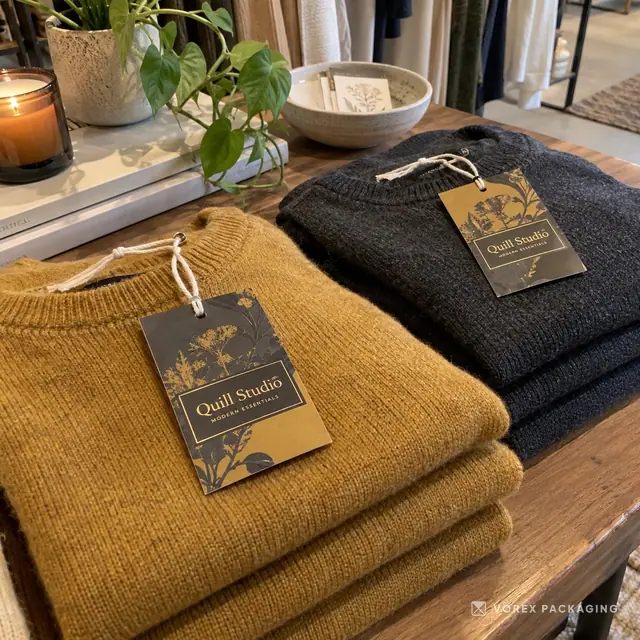
8:43 Maya: Exactly. And a hang tag is a nice touch for gifts. It can carry the scent, a short description, your website, and a blank line that says "to" and "from". Then the customer doesn't need a separate card.
8:55 Jordan: And the last part, what they carry away.
8:57 Maya: Bags. At a market, people buy something and then keep walking for another hour. If you hand them a bag with your logo, your brand walks around the market with them.
9:07 Jordan: A walking advertisement.
9:08 Maya: A small one, but yes. And it's practical. People are juggling hot drinks, gloves and other purchases. A paper shopping bag with handles is much easier than carrying three loose boxes.
9:20 Jordan: Any tips on bag size?
9:22 Maya: Choose a bag that fits your most common purchase, like two or three boxes side by side, and maybe a larger one for big orders. Tissue paper in the bag also helps the gift feel finished.
9:33 Jordan: What about weather? Some markets are outdoors.
9:36 Maya: Good question. Paperboard boxes don't like rain or wet tables. So keep your stock in closed bins under the table, put a cover on the table if the forecast looks bad, and only put out what you need on display.
9:49 Jordan: And don't put boxes directly on the ground.
9:51 Maya: Right. Keep them off the ground and out of puddles. Your packaging is your stock too.
10:00 Jordan: Now let's go product by product. Candles first.
10:03 Maya: With candles, everything starts with the vessel. The National Candle Association says container and jar candles are currently the most popular type with American consumers.
10:14 Jordan: So most candle makers at a market are selling jars or tins.
10:18 Maya: Most of them, and that's what we'll focus on. A jar candle has three packaging problems. It's heavy for its size, the glass can break, and the wax surface can get dusty or scratched.
10:30 Jordan: So you need protection, and a way to keep the top clean.
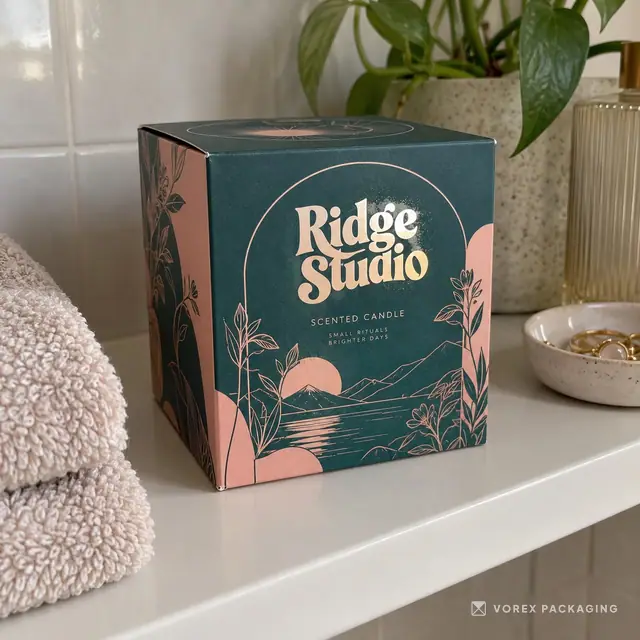
10:33 Maya: Exactly. Let's start with the box. A candle box is usually a tuck end box or a two-piece box with a lid, sized to the jar. You measure the jar's width and height, add a small amount of room, and that becomes the inside size of the box.
10:48 Jordan: How much room?
10:49 Maya: Enough that the jar slides in and out easily, but doesn't rattle around. The best way to check is to order one box in your size and try it with your actual jar. A few millimeters too tight and it won't go in. Too loose and it rattles.
11:03 Jordan: And for glass, what about inserts?
11:05 Maya: An insert is a card piece inside the box that holds the jar in place. For a single jar in a snug box, you might not need one. For gift sets with two or three candles, or for shipping, inserts really help, because they stop the jars knocking into each other.
11:21 Jordan: You mentioned keeping the wax clean. What are the options?
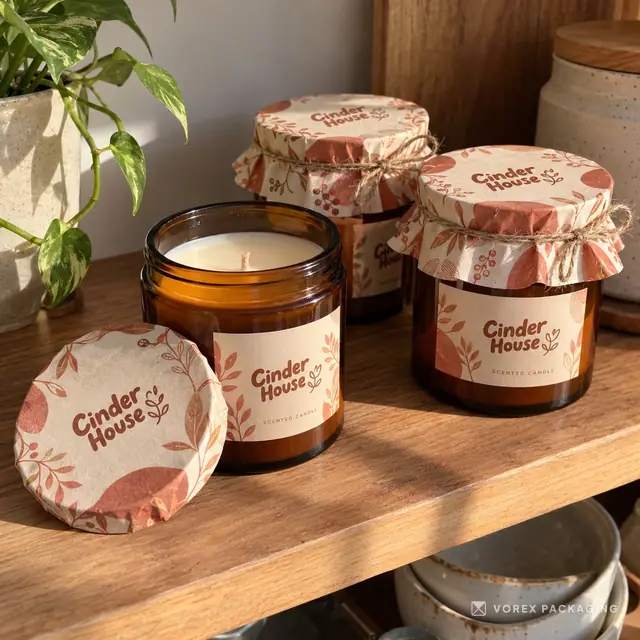
11:25 Maya: If your jar has a lid, the lid does that. If it doesn't, there's a simple piece called a candle dust cover. It's a printed disc of card that sits on top of the wax inside the jar.
11:36 Jordan: So when someone opens the box, the first thing they see is your logo on that disc.
11:41 Maya: Yes. It's one of the cheapest ways to make the opening feel branded. And it keeps the wax clean in the box, and on the table, if you sell some candles without a box.
11:51 Jordan: Can you sell candles without a box at all?
11:53 Maya: Of course. Lots of makers sell jars with a lid and a label, and offer a box as a gift option. That's a perfectly good approach. The box becomes an upgrade for people buying gifts.
12:05 Jordan: Now labels. What does a candle label need?
12:07 Maya: There are two kinds of label on most candles. The front label, with your brand and scent, and a warning label, usually on the bottom of the jar.
12:16 Jordan: What goes on the warning label?
12:18 Maya: The National Candle Association has a page called Understanding the Label. It says every candle should include a cautionary label with three key safety rules.
12:28 Jordan: Which are?
12:28 Maya: Burn within sight. Keep away from combustibles. And keep away from children. They also publish graphic icons for those three rules, and they say many labels add the maker's own burning guidance.
12:41 Jordan: And they say why the label matters?
12:43 Maya: They put it simply. Candle safety starts with the label. And they say a missing label may mean the candle doesn't meet safety standards. So for a maker, a clear warning label is part of looking professional.
12:55 Jordan: And makes it safer for the customer.
12:57 Maya: Exactly. And again, this is the trade association's guidance, not legal advice. If you're not sure what applies to your candles, check with the association's materials or a professional.
13:09 Jordan: Let's talk design. Kraft or full color for candles?
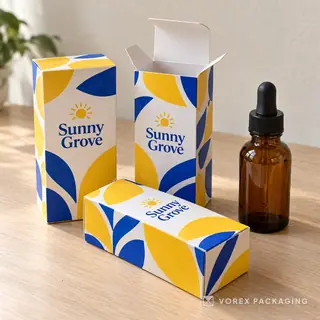
13:12 Maya: Both work. Kraft fits natural candles really well, like soy or beeswax, and it pairs nicely with a simple one-color logo. Full color fits candles with a strong seasonal theme or a bright brand.
13:25 Jordan: And luxury candles?
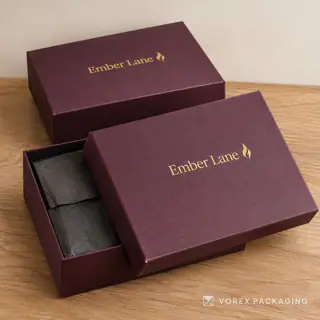
13:26 Maya: Those often go in rigid boxes. Rigid boxes are made of thick board wrapped in printed paper, often with a lift-off lid or a magnetic closure. They feel heavy and premium, and they're more often used for higher-priced candles or gift sets.
13:42 Jordan: Is there a seasonal trick here, like we talked about for pie boxes?
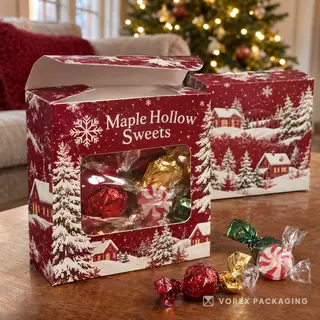
13:46 Maya: The same trick works. Keep the box itself in your normal brand design, so you can use it all year. Then add the holiday part with a sticker, a belly band or a hang tag. When the season ends, the boxes don't go to waste.
13:59 Jordan: Brand on the box, season on the sticker.
14:02 Maya: That's it.
14:03 Jordan: One more candle point. What about people who buy online after they've met you at a market?
14:08 Maya: That happens a lot, because a market is often where people discover you. Then in December they go to your website and order more as gifts.
14:16 Jordan: And then the candle has to survive the mail.
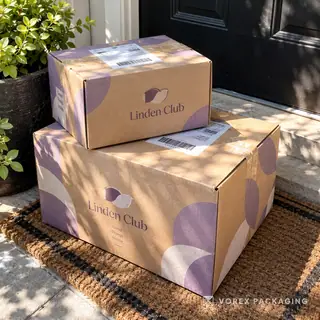
14:18 Maya: Right. A retail candle box on its own isn't made for shipping. For online orders, you put the boxed candle into a corrugated shipping box or mailer, with inserts or padding so the jar can't move. Test it before the rush. Pack one, and drop it from table height a few times onto a hard floor.
14:37 Jordan: The highly scientific drop test.
14:39 Maya: It's simple, but it tells you a lot. If the jar survives that, you're in a much better place.
14:48 Jordan: Chapter four. Soap.
14:50 Maya: Soap is fun, because there are so many packaging styles for one small bar. And a lot of them are designed to let people see and smell the soap.
14:58 Jordan: Because people smell soap before they buy it.
15:01 Maya: At a market, almost everyone does. They pick it up and bring it to their nose. So a fully closed box can actually work against you, unless it has a window or a cut-out.
15:11 Jordan: So what are the options?
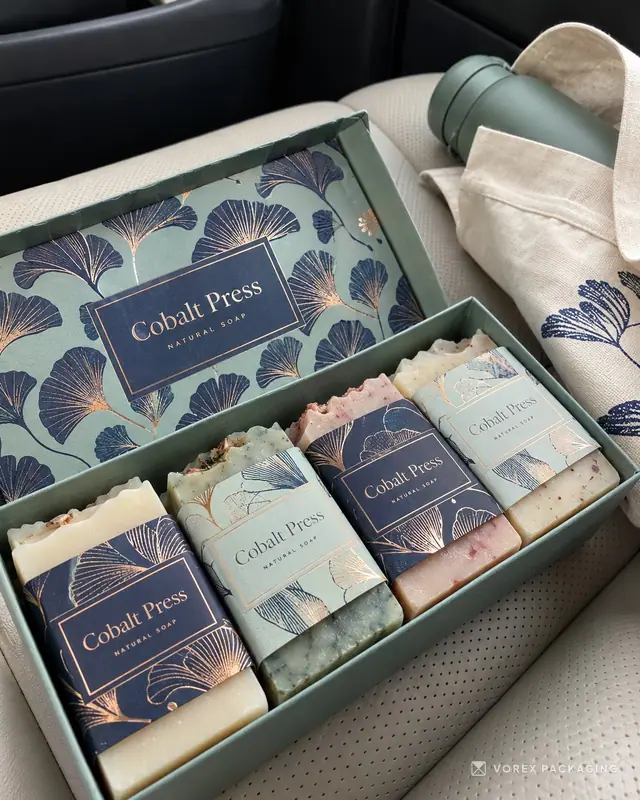
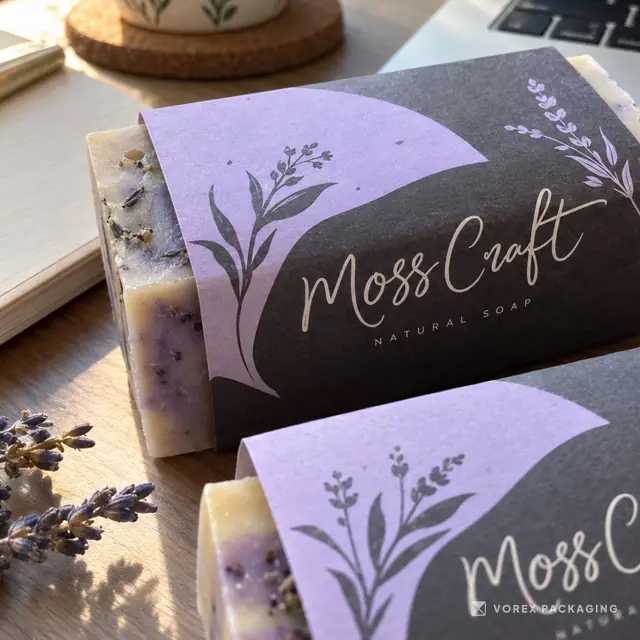
15:12 Maya: Let's go from the most open to the most closed. The simplest is a soap band or belly band. It's a printed strip of paper that wraps around the middle of the bar. The ends of the soap are open, so people can see and smell it.
15:26 Jordan: And then?
15:27 Maya: Then a soap sleeve. A sleeve is a printed tube of card that the bar slides into. It covers more of the bar than a band, so there's more room for your logo, the scent and the ingredients, but the ends are still open.
15:40 Jordan: I've heard the word holster for soap boxes. What's that?
15:43 Maya: A holster is a box with open ends, or a cut-out on the front, that hugs the bar. It's a bit more structured than a simple sleeve. The bar is held firmly, and the open part shows the soap.
15:55 Jordan: And die-cut boxes?
15:56 Maya: A die-cut soap box is a closed box with a shaped cut-out. It might be a circle, a leaf, or a window shape. The cut-out shows the soap and lets the scent through. And the box protects the bar's corners better than a band does.
16:11 Jordan: And then a fully closed box.
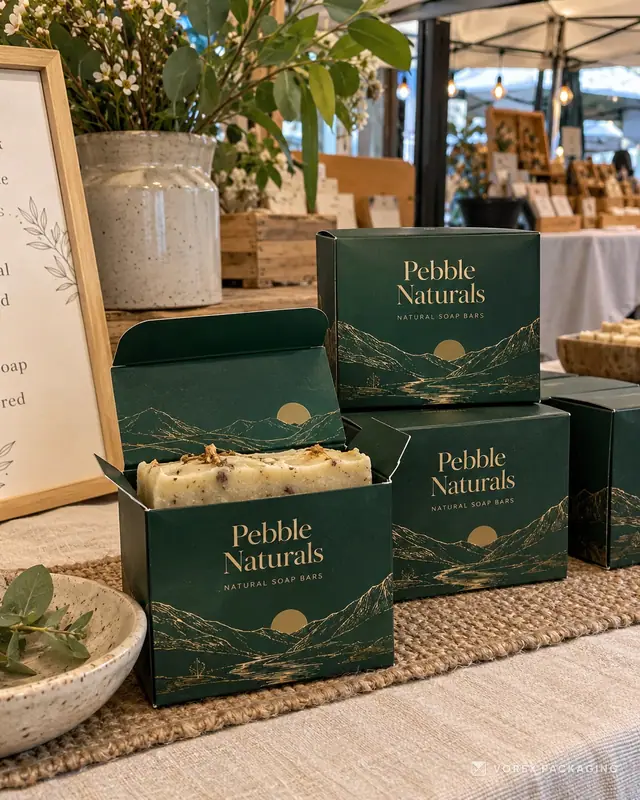
16:12 Maya: Right. A closed tuck end box, often in kraft, sometimes with a clear window. It protects the bar the most, and it's the best choice for gift sets or for soap that will be shipped. But at a market, you'll want a tester bar on the table so people can still smell it.
16:28 Jordan: What about materials? A lot of soap packaging seems to be kraft.
16:32 Maya: Kraft is very popular with soap makers, because the brown board looks natural and handmade. A one-color logo on kraft looks clean and honest.
16:41 Jordan: Is there anything about soap that's hard on packaging?
16:44 Maya: Yes, one practical thing. Handmade soap contains oils, and some bars can leave marks on paper over time, especially if they're stored somewhere warm. So test your bar in your chosen packaging for a while before you order a big run, and see whether it leaves a mark.
17:01 Jordan: Test first. That keeps coming up.
17:03 Maya: It keeps coming up because it's the cheapest way to avoid a big mistake.
17:07 Jordan: Now, labels for soap. I think this is more complicated than people expect.
17:12 Maya: It is, and it's genuinely interesting. The FDA has a page called "Is It a Cosmetic, a Drug, or Both? Or Is It Soap?" And it explains that the word soap means something specific in the regulations.
17:24 Jordan: What does it mean?
17:26 Maya: According to the FDA, a product counts as soap only when most of it is made of what they call alkali salts of fatty acids, which is traditional soap made with lye and oils. Its cleaning action has to come from those compounds. And it has to be labeled, sold and represented only as soap.
17:44 Jordan: And if it meets that definition?
17:46 Maya: Then the FDA says it's regulated by the Consumer Product Safety Commission, not by the FDA.
17:52 Jordan: And if it doesn't?
17:53 Maya: If a cleanser doesn't meet all of those criteria, it's either a cosmetic or a drug. And here's the part that matters for packaging. The FDA explains that the claims you make change the category.
18:05 Jordan: Give me an example.
18:06 Maya: The FDA page says that if a product is intended for other purposes, like moisturizing or deodorizing, it's a cosmetic. And if it's intended to treat or prevent disease, for example by killing germs, it's a drug.
18:20 Jordan: So the words you print on the box can change which rules apply.
18:24 Maya: That's exactly the point. A lovely word like "moisturizing" on your soap sleeve might move your product into a different category, with different labeling rules. So before you print a claim, read that FDA page, or ask someone who knows the rules.
18:40 Jordan: That's a really useful thing to know before you order a few hundred sleeves.
18:44 Maya: It is. Print the scent, the ingredients, your brand and your contact details. And think carefully about every claim word.
18:56 Jordan: Chapter five. Treats. Cookies, fudge, candy, chocolate.
18:59 Maya: Treats are different from candles and soap in one big way. People buy them with their eyes. So for treats, windows are your friend.
19:07 Jordan: A clear window on the box.
19:09 Maya: Yes. A window box lets people see the cookies or the fudge without opening anything. And at a market, where you can't open every box for every customer, that's a big help.
19:19 Jordan: What kind of boxes work for treats?
19:22 Maya: It depends on the treat. Fudge is often sold in slabs or squares, so a shallow box with a liner works. Truffles and chocolates usually go into small boxes with an insert that has a little cavity for each piece. Cookies go into flat boxes or tins, often with a window. And small candies work nicely in pillow boxes or favor boxes.
19:44 Jordan: Favor boxes, like at weddings?
19:46 Maya: Same idea. Small printed boxes that hold a few pieces. At a holiday market, they make great small gifts, stocking stuffers, or a little treat someone buys for themselves while they walk.
19:58 Jordan: Anything practical to watch for with treats?
20:00 Maya: Two things. Grease and freshness. Buttery cookies and fudge can leave grease marks on plain paperboard, so ask for a coated board or use a liner or a glassine bag inside the box.
20:12 Jordan: And freshness?
20:14 Maya: Many treats need to be kept sealed to stay fresh. So a common approach is to seal the treats in a food-safe bag first, and then put that bag into the printed box. The bag keeps the food fresh, and the box makes it a gift.
20:27 Jordan: Two layers, two jobs.
20:28 Maya: Exactly. And a sticker that seals the bag or the box also shows the customer it hasn't been opened.
20:35 Jordan: And labels for food. This is where the rules really matter.
20:38 Maya: They do. First, allergens. The FDA lists nine major food allergens identified by law in the United States. Milk, eggs, fish, crustacean shellfish, tree nuts, peanuts, wheat, soybeans, and sesame.
20:52 Jordan: And for holiday treats, a lot of those show up. Butter, eggs, wheat flour, nuts.
20:57 Maya: Very often. Think of a pecan fudge or an almond cookie. So the label has to be clear about what's inside. How exactly to do that depends on the rules that apply to you.
21:07 Jordan: And what applies to a home baker selling at a market?
21:10 Maya: That's the important question, and it really depends on your state. Many states have what are often called cottage food rules for food made in a home kitchen, and they're different from state to state. Some states require a specific label statement saying the food was made in a home kitchen, for example.
21:28 Jordan: So you can't just copy a label from someone in another state.
21:32 Maya: Right. Check your own state's rules, and the rules of the market you're selling at. Many markets have their own requirements for food vendors too.
21:40 Jordan: Is that a packaging question or a legal question?
21:43 Maya: Both. The rules decide what has to be on the label. The packaging decides where it goes. A lot of makers solve it with a plain printed box for the brand, and a separate label or sticker with the ingredients and allergens for each flavor.
21:57 Jordan: So you can change the label for each flavor without changing the box.
22:02 Maya: Exactly. One box, many labels.
22:08 Jordan: It's time for our stories. Two real brands, both with roots in the kind of products we're talking about today.
22:15 Maya: The first one surprises a lot of people. Burt's Bees, the brand everyone knows for lip balm, started as a candle business.
22:22 Jordan: Candles? Not lip balm?
22:24 Maya: Candles. The details are in the Wikipedia article on Burt's Bees. The business began in Maine in the nineteen eighties, and it was founded in nineteen eighty-four.
22:34 Jordan: Who started it?
22:35 Maya: Roxanne Quimby started making candles from Burt Shavitz's leftover beeswax. Burt was a beekeeper, so there was wax left over from the honey.
22:44 Jordan: So the first product was literally made from a by-product.
22:47 Maya: Exactly. And their first headquarters, according to the article, was an abandoned one-room schoolhouse, rented from a friend for one hundred and fifty dollars a year.
22:57 Jordan: That's a very small start.
22:59 Maya: Very small. And here's the part that's perfect for today's episode. The article says the business grew from an initial two hundred dollars at the Dover-Foxcroft Junior High School craft fair to twenty thousand dollars in sales by the end of its first year.
23:14 Jordan: So the very first sale was at a school craft fair.
23:17 Maya: That's how the article tells it. A craft fair table, handmade candles, and a couple of hundred dollars.
23:23 Jordan: And then what happened?
23:25 Maya: In nineteen eighty-nine, a New York City boutique called Zona ordered hundreds of their beeswax candles. The company hired forty more employees and started making products in an abandoned bowling alley.
23:37 Jordan: From a craft fair to a bowling alley factory.
23:39 Maya: Yes. And around that time, Quimby read one of Burt's old nineteenth century books about beekeeping, which had recipes for personal care products. That pushed the company toward personal care.
23:50 Jordan: Which is where the lip balm comes from.
23:52 Maya: Right. They incorporated in nineteen ninety-one with a line that included candles, natural soaps and perfumes, and eventually lip balm, which became their best-selling product. Much later, in two thousand seven, the company was acquired by Clorox.
24:09 Jordan: So what's the packaging lesson?
24:10 Maya: For me there are two. First, the craft fair was the start, not a side project. That first table was where the business proved people would pay. So treat your market table as seriously as a store.
24:22 Jordan: And the second?
24:23 Maya: The second is about being ready when a bigger buyer shows up. That boutique order was for hundreds of candles. If a shop owner walks past your market table this season and asks about a wholesale order, you want packaging that already looks shelf-ready. Boxes with your brand, the right labels, and a consistent look.
24:42 Jordan: Because a shop isn't going to put bare jars on its shelf.
24:45 Maya: Usually not. They want a product that sells itself on their shelf, the same way it does on your table.
24:51 Jordan: Our second story is about soap.
24:53 Maya: It's Dr. Bronner's Magic Soaps. It's an American company, now based in Vista, California, and it was founded in the late nineteen forties by Emanuel Bronner.
25:04 Jordan: I know the bottles. They're covered in tiny writing.
25:07 Maya: That's exactly why we picked it. The Wikipedia article says the company's products are known for their text-heavy labels, and for the number of uses they list for a single product. It says one soap advertises eighteen uses.
25:20 Jordan: Eighteen uses for one soap.
25:22 Maya: Eighteen, according to the article. And the story behind the labels is that Bronner first gave the soap to people who came to hear him talk about his philosophy. He came to believe they were really there for the soap.
25:34 Jordan: So he moved his message onto the soap.
25:36 Maya: Right. He started printing his teachings on the soap bottles. And the labels still carry long passages of his writing today.
25:44 Jordan: That's the opposite of everything designers usually say. Keep it simple, lots of white space.
25:50 Maya: It is the opposite. And it worked for them, because the label became the most recognizable part of the product. You can spot that bottle from across a store.
25:59 Jordan: Is there another part of the story about labels?
26:02 Maya: There's one more that I like. The article says the soap had long included caramel coloring, but the company had never disclosed it. In nineteen ninety-nine, when the company rebranded, David Bronner faced a choice. Declare the ingredient, or leave it out.
26:17 Jordan: And what did he do?
26:19 Maya: He replaced the caramel color with hemp oil. So instead of hiding an ingredient, they changed the recipe so the label could be honest.
26:27 Jordan: So what are the lessons from Dr. Bronner's?
26:29 Maya: First, your label can be your brand. You don't have to copy their style, and most makers shouldn't. But it shows that a distinctive label, used the same way on every product, becomes something people recognize.
26:41 Jordan: And the second?
26:43 Maya: Be honest on the label. It connects to what we said about soap claims. Every word on your packaging should be true, and you should be comfortable with every ingredient being listed.
26:56 Jordan: Chapter seven. Gift sets. Why are they so useful at a holiday market?
27:01 Maya: Because a gift set solves a problem for the customer. They don't have to choose items, they don't have to wrap anything, and they know what they're spending on one person.
27:10 Jordan: So it's easy to buy.
27:11 Maya: Very easy to buy. And for the maker, a set often means selling more than one item in one sale.
27:17 Jordan: What goes into a good market gift set?
27:20 Maya: Here's a hypothetical example. Imagine a small soap and candle maker. To be clear, she's a made-up example, not a real shop. We'll just call her our example maker.
27:30 Jordan: Our example maker. Got it, made up.
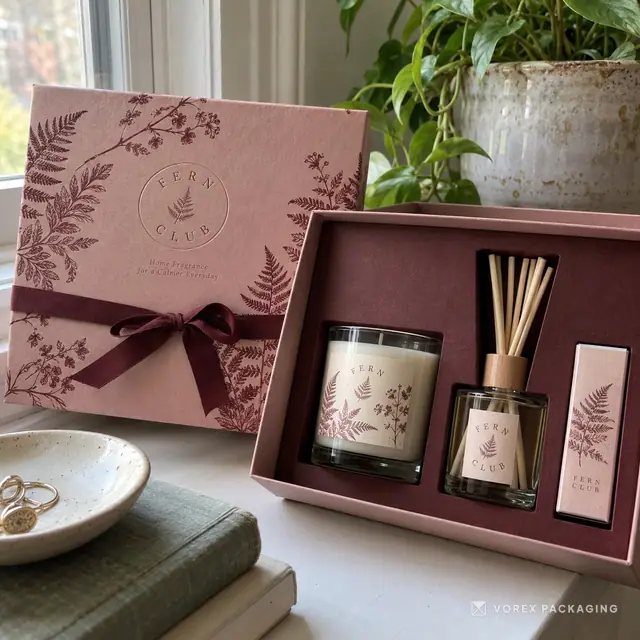
27:33 Maya: Her set might be one small jar candle, two soap bars and a little wooden soap dish, in one box with an insert that holds each piece in place. She picks scents that go together, like a pine candle and two winter soaps.
27:46 Jordan: And what kind of box?
27:47 Maya: For a set like that, a two-piece box with a lid, or a mailer box with a printed inside, works well. The insert matters most. Without it, the pieces slide around, and the set looks messy when someone opens it.
28:01 Jordan: Do all gift sets need to be big?
28:03 Maya: Not at all. In fact, it helps to have gifts at different sizes. A big set as the centerpiece of the table, a medium one, and small gifts like a single soap in a sleeve, a mini candle, or a few truffles in a favor box.
28:17 Jordan: Stocking stuffers.
28:18 Maya: Exactly. Small gifts are easy impulse buys. Someone stops to look at your big gift set, and leaves with a small one.
28:26 Jordan: And Thanksgiving fits in here too, right?
28:28 Maya: It does. Remember the National Candle Association numbers. On the same list, sixty-six percent of candle buyers said a candle is an appropriate hostess or dinner party gift.
28:39 Jordan: And Thanksgiving is the biggest dinner party of the year.
28:42 Maya: For a lot of people, yes. So a market the weekend before Thanksgiving is a good place for a small hostess gift. A candle in an autumn sleeve, or a box of treats with a thank-you tag.
28:53 Jordan: Bring a candle to the person who cooked the turkey.
28:56 Maya: That's a good gift.
28:57 Jordan: Any tips on making a gift set feel special when it's opened?
29:01 Maya: A few simple ones. Tissue paper with your logo, wrapped around the products. A printed card inside with a short note about your shop and how to use the products. And a sticker that seals the tissue.
29:13 Jordan: Those are all small things.
29:14 Maya: They're small, but together they make the opening feel like a gift. And every one of them carries your name, so the person who receives the gift knows where it came from.
29:24 Jordan: Which is how a gift turns into a new customer.
29:26 Maya: Exactly. Put your website or a QR code on the card or the hang tag, so the person who receives the gift can find you in January.
29:39 Jordan: Chapter eight. How do you know how much packaging to order for a season of markets?
29:44 Maya: Let's go back to our made-up example maker. Let's say she has three markets booked between now and Christmas, and she sells candles, soap and gift sets.
29:53 Jordan: And she's made inventory for each one.
29:55 Maya: Right. So the first rule is simple. Count by product, not by market. Every candle she plans to sell in a box needs a box. Every soap bar needs a sleeve or a band. Every gift set needs a box, an insert, tissue and a card.
30:10 Jordan: And the bags?
30:11 Maya: Bags are counted by sale, not by product, because one customer might buy three things and get one bag. If she doesn't have any data yet, she can make a rough guess based on how many sales she hopes to make, and keep a little extra.
30:25 Jordan: What about labels?
30:26 Maya: Labels add up quickly. Every candle has a front label and a warning label. Every soap has a scent label. Every food item might have a flavor label and an ingredients label. So if you have ten scents, you might need ten different labels.
30:41 Jordan: Ten scents, ten labels. That's where people get caught out.
30:44 Maya: Very often. Write a simple list. Product, how many, which box, which labels. It takes ten minutes and it prevents a lot of panic.
30:52 Jordan: How much extra should people keep?
30:54 Maya: We won't give a percentage, because it depends on the maker. But think about what goes wrong. A box gets damaged in the rain. A customer wants an extra box for a gift. A market goes better than expected. Some extra packaging covers all of those.
31:09 Jordan: And if there's packaging left in January?
31:12 Maya: That's why we said to keep the boxes in your normal brand design, and put the holiday part on stickers and tags. Leftover boxes can be used for Valentine's Day, Mother's Day, or just regular sales.
31:24 Jordan: Timing. When should people order?
31:26 Maya: As early as possible. We never promise delivery dates on this show, because they depend on the order and the address. What we can say is, the earlier you order, the less stressful the season is.
31:38 Jordan: And if someone hears this just before a market?
31:40 Maya: Then ask about rush when you request your quote, rather than hoping. And use what you have for the first market. Even a plain box with a good sticker looks much better than nothing.
31:50 Jordan: Any other planning tips?
31:52 Maya: Two. First, approve your proof carefully. Check the spelling of every scent name, your website address, and the sizes. And second, order a single box in your size first if you can, to test the fit with your real product.
32:05 Jordan: Test the fit, check the proof, then order the batch.
32:08 Maya: That's the order of things.
32:14 Jordan: Time for the question. This one is a question we picked ourselves, because it fits today's episode so well.
32:20 Maya: Go ahead.
32:21 Jordan: "I sell at markets and I also have an online shop. Do I need different packaging for each, or can I use the same boxes?"
32:29 Maya: That's a great question, and the answer is, mostly the same, with one extra layer for shipping.
32:34 Jordan: Explain that.
32:36 Maya: Your product packaging, the candle box, the soap sleeve, the treat box, should be the same everywhere. That's your brand. The customer who meets you at a market should recognize the same box when they order online.
32:48 Jordan: And the extra layer?
32:49 Maya: For online orders, you need an outer shipping box or mailer around the product packaging, because retail boxes aren't built to survive the mail. A corrugated mailer, or a shipping box with an insert.
33:02 Jordan: Should the shipping box be printed too?
33:04 Maya: It can be. A printed mailer with your logo makes the delivery feel special, and it's a good place for a short thank-you message inside. But if you're just starting, a plain mailer with a logo sticker is fine.
33:17 Jordan: Is there anything that should be different at the market?
33:20 Maya: A couple of things. At the market, you want things that are easy to see and easy to carry. Windows, scent names on top, and bags. Online, people have already chosen from photos, so the focus is on protection and a nice unboxing.
33:34 Jordan: So the product box is the same, but the extras change.
33:37 Maya: Exactly. The box is your brand. Bags and tags are for the market. Mailers and inserts are for shipping.
33:44 Jordan: Good answer. And if any listener wants to send a real question for a future episode, there's a "Share your packaging story" form on the Vorex website.
33:54 Maya: And we'll only use it on the show if you give us permission.
34:01 Jordan: That's our episode on holiday markets. Maya, how do people take the next step?
34:06 Maya: Start with the industry pages on the Vorex website. There are pages for candle packaging, soap packaging, and candy and chocolate packaging, plus the Thanksgiving packaging page.
34:17 Jordan: And to get pricing?
34:19 Maya: Request a quote at vorexpackaging.com/quote. Send your product list, the size of each product, rough quantities, and the date of your next market. If you're not sure which style fits, describe your product, and a packaging specialist can suggest a style and size.
34:35 Jordan: What's included?
34:36 Maya: Every order comes with free digital design and a free dieline. There's no minimum order, so you can order one piece or ten thousand. Shipping is free on every order across the USA.
34:47 Jordan: And the proof?
34:48 Maya: You get a digital proof on your dieline, and nothing prints until you approve it in writing. You can stop at any point before you approve the final proof. Production is fast once you approve, and then your order ships.
35:01 Jordan: And for people who want to test first?
35:03 Maya: Some standard items are listed on the website as single printed pieces with an Add to cart button. For example, there's a listed candle box in four by four by four inches, in eighteen point paperboard. Order one, put your jar in it, and see how it looks.
35:19 Jordan: And the prices?
35:20 Maya: The current prices are on each product page. They can change, so the website and your quote always have the final word.
35:27 Jordan: And if something goes wrong?
35:29 Maya: Production errors and transit damage reported within sixty days of delivery are reprinted at no cost. The details are on the how it works page.
35:38 Jordan: And the labels, stickers and tags?
35:40 Maya: Vorex makes those too. Candle labels, soap sleeves and belly bands, hang tags, tissue paper and shopping bags, so the whole table can match. And you can upload your logo and see it on a box in 3D on the website before you decide anything.
35:55 Jordan: And if someone's in a hurry?
35:57 Maya: Rush orders are available on request. Ask when you request your quote. Everything we mentioned today, Small Business Saturday, the history of Christmas markets in the US, the National Candle Association's numbers and label guidance, the FDA's soap page and allergen list, Burt's Bees and Dr. Bronner's, is linked in the show notes.
36:18 Jordan: Next episode, we stay with the season and talk about going from Thanksgiving to Black Friday with one packaging plan.
36:25 Maya: If this episode helped, follow the show, and send it to a maker friend who's packing for their first holiday market.
36:32 Jordan: Brand on the box, season on the sticker, and a bag for every sale.
36:36 Maya: Brand on the box, season on the sticker, and a bag for every sale. Thanks for listening to The Vorex Packaging Podcast. I'm Maya.
36:44 Jordan: And I'm Jordan. Happy holidays, and see you next time.
Voices produced with AI text-to-speech.