













Eco-Friendly Packaging Claims: What You Can Honestly Print on Your Box
· 34 min · The Vorex Packaging Podcast
In episode six, Maya and Jordan look at green claims on packaging: what you can honestly print on your box in the USA. The FTC Green Guides (first issued 1992, revised 1996, 1998 and 2012; comment on updates requested December 14, 2022; recyclable-claims workshop March 1, 2023): why unqualified 'eco-friendly' claims are hard to support, the 'substantial majority' rule for recyclable claims (at least 60 percent), when the resin identification code counts as a recyclable claim, home versus commercial compostable claims, the one-year test for degradable claims, pre- and post-consumer recycled content, and why a seal is still a claim. Then FSC 100%, FSC Recycled and FSC Mix labels and chain of custody, design choices from the Vorex eco-friendly packaging guide (right-sizing, fewer plastic parts, aqueous coatings, paper inserts), a hypothetical claim-rewrite workshop, the 2026 Thanksgiving and Black Friday dates, and a question: can I print the recycling symbol on my kraft boxes? Not legal advice.
Player not loading? Spotify's player isn't available in every country. Open the episode on Spotify, or read the full transcript below.
In this episode
- A claim on a box is also an instruction: customers decide recycling bin, compost or trash from what you print.
- FTC Green Guides: first issued 1992, revised 1996, 1998 and 2012; the FTC requested comment on updates on Dec 14, 2022 and held a recyclable-claims workshop on Mar 1, 2023.
- The guides are not binding by themselves (16 CFR 260.1), but the FTC can act under Section 5 of the FTC Act against claims inconsistent with them.
- Unqualified general claims such as 'eco-friendly' are difficult to interpret and likely convey a wide range of meanings (260.4): name the specific benefit instead.
- Recyclable (260.12): unqualified only if recycling facilities are available to a substantial majority (at least 60 percent) of consumers or communities where the item is sold; otherwise qualify, e.g. 'This package may not be recyclable in your area.' A conspicuous resin identification code is a recyclable claim.
- Compostable (260.7): qualify if the item cannot break down safely or in a timely manner in a home compost pile, or if facilities are not available to a substantial majority.
- Degradable (260.8): deceptive unqualified for solid-waste items that do not completely decompose within one year after customary disposal.
- Recycled content (260.13): substantiate pre-consumer and post-consumer claims; ask your supplier for the real figure for your order before printing a percentage.
- FSC 100%, FSC Recycled and FSC Mix mean different things; using the label needs FSC chain of custody certification or a promotional licence. Third-party certification does not remove your duty to substantiate (260.6).
- Vorex eco guide: use less packaging, prefer widely collected paper-based materials, limit or make separable plastic laminates, windows, foam and magnets; aqueous coatings, paper inserts and plain kraft are generally easier for paper recycling.
- Rewrite rule: tell people what you did and what to do with the box, not how to feel about it. Material, instruction, proof.
- 2026 dates: US Thanksgiving Nov 26, Black Friday Nov 27, Small Business Saturday Nov 28, Cyber Monday Nov 30. Re-check every claim when a holiday design adds windows, foil or inserts.
Chapters
- 0:00 Cold open
- 1:09 Welcome to the show
- 3:05 Why green claims on a box matter
- 5:11 The US rulebook: the FTC Green Guides
- 8:57 Recyclable, compostable, degradable: the words decoded
- 15:08 Real story: the recyclable coffee pod
- 18:50 Certification labels: FSC and other seals
- 21:47 Design choices that make a box easier to recycle
- 25:15 Workshop: rewrite the claim
- 28:24 Question: can I print the recycling symbol?
- 30:26 Get started
Sources
The story segment uses public sources only. We paraphrase and state only what each source supports.
- Federal Trade Commission: Green Guides (ftc.gov, read 23 Oct 2026). First issued 1992, revised 1996, 1998 and 2012; 2012 added guidance on certifications and seals, renewable materials and energy, carbon offsets; request for public comment Dec 14, 2022; recyclable-claims workshop Mar 1, 2023; enforcement examples include 2022 false bamboo claims involving Kohl's and Walmart.
- Federal Trade Commission: 16 CFR Part 260: Guides for the Use of Environmental Marketing Claims (eCFR, read 23 Oct 2026). 260.1 guides do not bind, Section 5 enforcement; 260.4 general environmental benefit claims; 260.6 certifications and seals; 260.7 compostable (home composting, substantial majority); 260.8 degradable (one year after customary disposal); 260.12 recyclable (substantial majority = at least 60 percent, qualifier wording, conspicuous resin identification code is a recyclable claim); 260.13 recycled content (pre- and post-consumer).
- Forest Stewardship Council: FSC labels (fsc.org, read 23 Oct 2026). FSC 100%, FSC Recycled and FSC Mix definitions; label use requires FSC chain of custody certification or a promotional licence; third-party audits.
- Vorex Packaging: Eco-friendly packaging choices: recyclable, compostable and kraft (vorexpackaging.com, read 23 Oct 2026). Use less packaging and right-size; corrugated, paperboard and paper widely accepted in curbside programs in the USA; plastic film laminates, large plastic windows, foam inserts and magnets can make recycling harder; aqueous coatings, paper inserts and plain kraft generally easier; compostable only where composting is available, labelled clearly; check FTC and Competition Bureau guidance.
- Vorex Packaging: Checkout, standard packs and how it works (vorexpackaging.com, read 23 Oct 2026). Packs and single pieces with Add to cart; checkout 'Pay later, no card needed', invoice after proof approval; fast production once you approve your proof; no minimum order for custom work; free shipping on every order (owner, 1 Nov 2026); reprint reported within 60 days; FIRST20 for new customers, not on packs.
Packaging mentioned
- Eco-friendly packaging choices (guide)
- Kraft packaging
- Compare kraft vs white boxes
- Mailer boxes
- Standard packs (fixed prices, Add to cart)
- Black Friday and corporate holiday gifts
- Thanksgiving packaging
- How it works
- Rush orders
- Quality guarantee (reprint)
Get a quote Try the 3D design preview
Full transcript
0:00 Maya: Jordan, I want you to imagine a box. Brown kraft board, a little leaf logo, and in big friendly letters on the side, it says one hundred percent eco-friendly.
0:10 Jordan: I've seen that box. I think I've seen that box a hundred times.
0:15 Maya: So have I. Now here's my question. What does it actually mean?
0:19 Jordan: That it's good for the planet?
0:21 Maya: Good for the planet how? Made from recycled paper? Recyclable after you use it? Compostable? Made with less material? Shipped with less fuel?
0:30 Jordan: Okay. When you put it like that, I have no idea what it means.
0:34 Maya: And that's the problem. That's actually the exact problem the regulators in the United States have written about. A claim that sounds lovely, but could mean almost anything.
0:44 Jordan: So today we're talking about green claims on packaging. What you can honestly print on your box, what the rules say in the United States, and how to make your packaging genuinely easier to recycle.
0:57 Maya: Welcome to The Vorex Packaging Podcast. I'm Maya.
1:07 Jordan: And I'm Jordan.
1:10 Maya: Welcome back, and welcome if this is your first episode. This show is for people who make and sell things. Candle makers, skincare brands, coffee roasters, bakers, online shops, and anyone who puts a product in a box.
1:24 Jordan: Quick recap. Episode one was about what your box says before anyone opens it. Episode two was board, print and finish. Episode three was dielines and proofs. Episode four was holiday packaging for bakeries, cafes and online shops. And episode five was shipping boxes and edge crush ratings.
1:45 Maya: And today is a topic that comes up with almost every small brand we can think of. You want your packaging to be better for the environment, and you want to say so on the box. Both of those are good instincts.
1:57 Jordan: But saying so is where people get into trouble.
2:00 Maya: It is. So today, we'll go through what the words mean, recyclable, compostable, degradable, recycled content, and what the official guidance says about each one.
2:10 Jordan: Before we start, a quick note. We're not lawyers, and this isn't legal advice. We'll tell you what the public guidance says, and we'll link every source, but if you're about to print a claim on a big run of boxes, it's worth checking with someone who does this for a living.
2:27 Maya: And our house rules haven't changed. When we mention a real company, a real date or a real number, it comes from a public source that we read while preparing this episode, and the links are in the show notes. When we use an example that isn't real, we'll tell you it's a hypothetical.
2:43 Jordan: Here's the plan. First, why green claims on a box matter. Then the United States guidance, called the Green Guides. Then the words, one at a time. Then certification labels, then design choices, then a hands-on rewrite of some claims, a question, and how to get started.
3:03 Maya: Let's get into it.
3:09 Jordan: Let's start simple. Why does this matter so much on packaging, specifically?
3:14 Maya: Because the box is where a lot of customers meet your environmental story for the first time. They might never read your website. They might never see your social posts. But they hold the box. They read the side panel. And then, at some point, they decide what to do with it.
3:29 Jordan: Recycling bin, compost, or trash.
3:32 Maya: Exactly. And whatever you printed on the box is part of that decision. If the box says recyclable, a customer is going to put it in the recycling. If it says compostable, someone might put it in their backyard compost pile and expect it to disappear.
3:48 Jordan: So a claim on a box isn't just marketing. It's an instruction.
3:52 Maya: That's a really good way to put it. It's an instruction people will follow. And if the instruction is wrong, the box ends up in the wrong place.
4:00 Jordan: And there's a business side, too.
4:02 Maya: There is. When you put a claim on packaging, you're making a promise. Your customers trust it. Regulators in both the United States take environmental claims seriously, and we'll get to a real example of what happens when a claim goes too far.
4:18 Jordan: Can I raise something I think a lot of people believe? Brown kraft board looks eco-friendly. So if my box is brown, isn't that kind of saying it already?
4:28 Maya: It's a great point, because color does communicate something. A plain kraft box feels natural and simple. But brown is a look, not a fact. A kraft box can be made from virgin fiber or recycled fiber. It can be laminated with plastic film, or not. The color tells you very little about what happens to the box after use.
4:49 Jordan: So the look is fine, but the words have to be true.
4:52 Maya: Right. Use the look you love. Just make sure every word you print is something you can back up.
4:58 Jordan: And I'd add, the most honest packaging story is often the simplest one. Here's what this box is made of, and here's what to do with it when you're done.
5:07 Maya: Hold on to that thought. We're going to come back to it at the end.
5:14 Jordan: Let's talk about the rules. In the United States, what should a small brand actually read?
5:20 Maya: The main document is called the Green Guides. They're published by the Federal Trade Commission, the F T C. The F T C's page says the guides were first issued in nineteen ninety-two, and revised in nineteen ninety-six, nineteen ninety-eight and twenty twelve.
5:37 Jordan: So they've been around for over thirty years.
5:39 Maya: They have. And the twenty twelve update added guidance on things like certifications and seals of approval, claims about renewable materials and energy, and carbon offset claims.
5:51 Jordan: Are they being updated again?
5:53 Maya: The F T C asked for public comment on possible updates on December fourteenth, twenty twenty-two. And on March first, twenty twenty-three, it held a workshop focused specifically on recyclable claims. So the word recyclable is clearly on their mind.
6:09 Jordan: Now here's what I always wonder. Are the Green Guides a law?
6:14 Maya: Not exactly. The guides themselves say they don't confer any rights on any person and don't bind the F T C or the public. They're guidance. They explain how consumers are likely to understand a claim.
6:26 Jordan: So I can ignore them?
6:28 Maya: I wouldn't. The same section explains that the F T C can take action under Section Five of the F T C Act, which is about unfair or deceptive practices, if a marketer makes a claim that's inconsistent with the guides. So the guides tell you how the F T C thinks about a claim, and the law behind it is the one about deception.
6:48 Jordan: Got it. Guidance on how to stay out of trouble, with real law behind it.
6:53 Maya: That's a fair summary. And the F T C's own Green Guides page lists enforcement examples. One of them is from twenty twenty-two, involving false bamboo claims on textile products by Kohl's and Walmart.
7:05 Jordan: Textiles, not packaging.
7:07 Maya: Right, but the principle is the same. If you say a product is made of something, or has some environmental benefit, it has to be true.
7:16 Jordan: So let's go back to our box from the cold open. One hundred percent eco-friendly. What do the Green Guides say about a claim like that?
7:24 Maya: That's what the guides call a general environmental benefit claim. Words like eco-friendly, green, or environmentally friendly. And the guides say unqualified general environmental benefit claims are difficult to interpret and likely convey a wide range of meanings.
7:42 Jordan: Which is exactly what we found in the first two minutes.
7:45 Maya: Exactly. So the guidance is that marketers shouldn't make those claims unqualified. If you use a general term, you should qualify it, which means you explain the specific benefit, clearly and close to the claim. And you shouldn't imply the product has no negative environmental impact at all.
8:03 Jordan: So instead of eco-friendly, you'd say something specific.
8:07 Maya: Something you can prove. For example, made from a certain percentage of recycled fiber, if that's true. Or, this box is made from paperboard, please recycle it where paper packaging is collected. Specific beats vague, every time.
8:21 Jordan: And I'd guess one hundred percent makes it worse, not better.
8:25 Maya: It's a bigger promise. One hundred percent of what? If there's a plastic window, a magnet, or a laminate on that box, one hundred percent of anything gets very hard to defend.
8:36 Jordan: Does the same apply to little leaf icons, globes, that kind of thing?
8:40 Maya: The guides deal with images too. They talk about seals, logos and symbols. An image that suggests a general environmental benefit can work like a general claim. So a big green globe with a check mark isn't a pass. It's a claim in picture form.
9:00 Jordan: Let's take the words one at a time. Start with the big one. Recyclable.
9:05 Maya: This is section two sixty point twelve of the Green Guides. The idea is simple. You can make an unqualified recyclable claim when recycling facilities are available to a substantial majority of consumers or communities where the item is sold.
9:20 Jordan: And a substantial majority means what?
9:23 Maya: The guides define it. At least sixty percent.
9:26 Jordan: So if at least sixty percent of the people where I sell can actually recycle this box, I can just say recyclable.
9:33 Maya: That's the threshold the guides give. And if it's lower than that, you qualify the claim. The guides give example wording. For example, this package may not be recyclable in your area. Or, when very few communities can recycle it, this package is recyclable only in the few communities that have appropriate recycling facilities.
9:53 Jordan: That second one is not a sentence anyone wants on their box.
9:57 Maya: No, and that's kind of the point. If the honest sentence is embarrassing, it might be a sign to change the material, not the sentence.
10:05 Jordan: Where do common box materials land?
10:08 Maya: The Vorex eco-friendly packaging guide says paper-based packaging, corrugated board, paperboard and paper, is widely accepted in curbside recycling programs across the USA. And it adds the important part. What you add to those materials matters, and local programs differ, so check what's accepted where your customers live.
10:29 Jordan: Okay, so a plain corrugated mailer is in a good place. What about the things we add?
10:35 Maya: The same guide names them. Plastic film laminates, large plastic windows, foam inserts and magnets can make a box harder to recycle, or require customers to separate parts. And it says aqueous coatings, paper inserts and plain kraft are generally easier for paper recycling.
10:53 Jordan: So recyclable isn't really a property of a box. It's a property of the whole package, plus where it ends up.
11:00 Maya: That's beautifully put. And it's why a box with a magnetic closure and a foam insert is a much harder recyclable claim than a plain mailer.
11:09 Jordan: What about that little triangle with a number in it? The one on plastic packaging.
11:14 Maya: That's the resin identification code. It tells you what kind of plastic something is made of. And the Green Guides have something specific to say about it. If you show it conspicuously, so it's prominent, it counts as a recyclable claim.
11:28 Jordan: Even though it's technically just a material code?
11:31 Maya: Even then. People see the arrows and think recyclable. So the guides say a conspicuous code is a recyclable claim, which means it needs to meet the same standard, or be qualified. If the code is placed in an inconspicuous spot, for example embedded in the bottom of a container, the guides say it doesn't count as a recyclable claim.
11:52 Jordan: So if you've got clear plastic inserts or windows with a big code printed on the front, that's worth a second look.
11:59 Maya: Definitely worth a second look.
12:01 Jordan: Next word. Compostable.
12:03 Maya: Compostable is a word people love, and it's one where details matter a lot. Section two sixty point seven says marketers should clearly and prominently qualify compostable claims if the item can't break down safely or in a timely way in a home compost pile or device.
12:22 Jordan: So there's a difference between home compost and, what, an industrial facility?
12:27 Maya: Right. Some materials only break down in a commercial composting facility, with higher heat and controlled conditions. If that's your packaging, you need to say so. And the guides add another condition. If composting facilities aren't available to a substantial majority of consumers where the item is sold, the claim should be qualified for that too.
12:48 Jordan: That's the same sixty percent idea again.
12:51 Maya: Same idea. Can the people you sell to actually do the thing you're telling them to do?
12:56 Jordan: So a compostable mailer is a good choice for some brands, but the box has to tell people how to compost it.
13:03 Maya: Yes. And the Vorex guide says the same thing in simpler words. Use compostable packaging where your customers can access suitable composting, and label it clearly.
13:14 Jordan: What about degradable, or biodegradable?
13:17 Maya: This one is strict. Section two sixty point eight says it's deceptive to make an unqualified degradable claim for items entering the solid waste stream, if the items don't completely decompose within one year after customary disposal.
13:32 Jordan: And customary disposal is a landfill, for most trash.
13:36 Maya: Landfill or incinerator, for most things. And landfills aren't designed for things to break down quickly. So for most packaging that's thrown in the trash, an unqualified biodegradable claim is very hard to support.
13:49 Jordan: So biodegradable on a box is usually a red flag.
13:53 Maya: I'd treat it as a word to avoid unless you have very specific evidence and you've read that section carefully.
14:00 Jordan: Last one. Recycled content. Made from recycled materials.
14:05 Maya: This one is actually a nice claim to make when it's true, because it's specific. Section two sixty point thirteen covers it. If you separate pre-consumer and post-consumer recycled content, you have to be able to back up each one.
14:19 Jordan: Explain the difference.
14:21 Maya: Post-consumer means the material was used by a consumer and then recycled. Like old shipping boxes going back into new board. Pre-consumer means material recovered during manufacturing, before anyone used it. And the guides say a pre-consumer claim needs substantiation that the material would otherwise have entered the waste stream.
14:41 Jordan: So you can't call your own factory offcuts recycled content if you were always going to reuse them.
14:48 Maya: That's the spirit of it. And the practical tip for a small brand is this. If you want to print a recycled content percentage, ask your supplier what the board actually contains, and get it in writing for your order. Don't guess a number because it sounds nice.
15:03 Jordan: Ask, get it in writing, then print it.
15:05 Maya: Ask, get it in writing, then print it.
15:12 Jordan: Okay. Story time.
15:15 Maya: This is a real case.
15:31 Jordan: Three million dollars, over the word recyclable.
15:34 Maya: Over recycling claims, yes. Let's go through what the Bureau said, carefully, because the details are the lesson.
15:41 Jordan: What was the issue?
15:43 Maya: According to the Bureau's news release, Keurig's K-Cup pods were being marketed as recyclable. But outside British Columbia and Quebec, the Bureau said, the pods were not widely accepted in municipal recycling programs.
15:56 Jordan: So in two provinces, the claim was closer to true, and in the rest of the country it wasn't.
16:02 Maya: That's how the Bureau described it. And there was a second part. The pods came with instructions to prepare them for recycling by peeling the lid off and emptying out the coffee grounds. The Bureau found those instructions misleading, because some local recycling programs require additional steps.
16:20 Jordan: Interesting. So even the instructions were a claim.
16:24 Maya: Exactly what we said earlier. On a package, instructions are claims. If you tell people peel and empty, and their local program needs more than that, the instruction isn't complete.
16:35 Jordan: What did Keurig agree to do, beyond the penalty?
16:38 Maya: The Bureau listed several things. Keurig agreed to change its recyclability claims and the packaging of the pods. It agreed to publish corrective notices, on its websites and social media, in national and local news media, in the packaging of new coffee machines, and by email to subscribers.
16:57 Jordan: That's a lot of places.
16:59 Maya: It is.
17:16 Jordan: Did the Bureau say anything about why it cared?
17:19 Maya: The Commissioner of Competition at the time, Matthew Boswell, was quoted in the release.
17:33 Jordan: That's about as clear as it gets.
17:35 Maya: So, what's the lesson for a small brand that sells candles or cookies, not millions of coffee pods?
17:41 Jordan: I'll try. First, where you sell matters. A claim that's true in one province or state might not be true in another. And if you sell across the United States, your box goes to all of those places.
17:55 Maya: Yes. Second?
17:56 Jordan: Second, instructions on the box are claims. If you tell people how to recycle something, the instruction has to work where they live, or say clearly that it depends on the local program.
18:08 Maya: And third?
18:09 Jordan: Third, fixing it later is expensive. Keurig had to change packaging and publish notices everywhere. For a small brand, the expensive part might be a whole run of boxes you can't use anymore. It's much cheaper to get the words right before you print.
18:25 Maya: That's exactly it. And this is a big company with a big product. Nobody's saying a small brand will face the same thing. But the principle is the same for everyone. Say what's true, where it's true.
18:37 Jordan: And honestly, I find it kind of reassuring. The rules aren't asking for anything strange. They're asking you to be specific and to tell the truth.
18:46 Maya: Specific and true. That's the whole episode in three words.
18:54 Jordan: Let's talk about logos people trust. Certification labels. The one I see most on paper packaging is F S C.
19:02 Maya: F S C is the Forest Stewardship Council. Its labels show up on paper and wood products. And there isn't just one F S C label, there are three, and they mean different things. These definitions are from F S C's own labels page.
19:16 Jordan: Go.
19:17 Maya: F S C one hundred percent means all the materials used come from responsibly managed, F S C certified forests. F S C Recycled means the product is made from one hundred percent recycled materials. And F S C Mix means the product is made with a mixture of materials from F S C certified forests, recycled materials, and or F S C controlled wood.
19:42 Jordan: So Mix is probably the one I'd see most on packaging.
19:45 Maya: Quite possibly. And here's the part that matters for a brand owner. You can't just download the logo and put it on your box.
19:53 Jordan: Why not?
19:54 Maya: F S C says the labels require a chain of custody certification, or a promotional licence. Chain of custody means every company that handles the material, from the forest or the recycler, through the paper mill, to the printer, is certified and audited, so the claim holds all the way along.
20:12 Jordan: So if I want that logo on my box, the printer has to be part of that chain.
20:17 Maya: The material and the companies handling it need to be in a certified chain, and the label has to be used under F S C's rules. So the right question to ask a supplier is, can you supply certified board for my order, and can the label be used on my packaging? Ask before you design, not after.
20:35 Jordan: And the Green Guides have something to say about seals in general, right?
20:40 Maya: Section two sixty point six. Two points worth knowing. First, third-party certification doesn't remove your own responsibility. The guides say certification doesn't eliminate a marketer's obligation to have substantiation for all the claims reasonably communicated by the certification.
20:58 Jordan: So the seal doesn't do your homework for you.
21:01 Maya: It doesn't. And second, a seal that doesn't say what it was certified for is likely to suggest a general environmental benefit. Which takes us right back to eco-friendly, the hardest claim to support.
21:14 Jordan: So a made-up badge that says certified green, with no detail, is a problem.
21:19 Maya: It's a general claim with a nicer border. If you use any seal, make sure it's real, you're allowed to use it, and it's clear what it stands for.
21:27 Jordan: I want to be clear about something for our listeners. We're not saying Vorex boxes carry any particular certification.
21:35 Maya: Right, and that's a good point. If a certified board matters to you, put it in your quote request, and the quote will say what's available for your order. Never assume, never print a seal you haven't confirmed.
21:50 Jordan: Okay. We've talked a lot about words. Let's talk about the box itself. What can a brand actually change to make packaging better, so the honest claim is a good one?
22:01 Maya: The Vorex eco-friendly guide starts in a place I really like. It says the simplest way to reduce packaging impact is to use less of it.
22:09 Jordan: Not the most glamorous advice.
22:11 Maya: No, but it's real. The guide explains that boxes made to your exact size need less board and less void fill, and they take up less space in trucks. And it says to avoid extra layers, like a box inside a box when one would do.
22:26 Jordan: Right-sizing again. That came up in episode five, too, for shipping costs.
22:31 Maya: It did. And it's nice when the cheaper choice and the greener choice are the same choice.
22:36 Jordan: What about finishes? We spent a whole episode on finishes. Lamination, soft touch, foil.
22:42 Maya: We did, and I still love a good finish. But this is a trade-off to understand. A plastic film laminate bonds a layer of plastic to the paper. The Vorex guide lists plastic film laminates as something that can make a box harder to recycle, and it lists aqueous coatings as generally easier for paper recycling.
23:01 Jordan: So if recyclability is part of your story, an aqueous coating might fit better than a film lamination.
23:08 Maya: That's one way to think about it. Ask about coating options when you request a quote, and tell them what you want the box to do at the end of its life. Then decide with both looks and recycling in mind.
23:20 Jordan: And windows and magnets?
23:22 Maya: The guide's advice is to limit plastic windows, foam and magnets, or make them easy to separate. Think about the person holding your box after the product is out. If they need scissors and five minutes to separate the parts, many of them just won't.
23:37 Jordan: Could you just tell them how?
23:38 Maya: You could, and that's a great use of a small line of print. Something like, remove the magnet before recycling the box. That's a clear, specific, honest instruction.
23:48 Jordan: Instead of a vague eco claim on the front.
23:51 Maya: Exactly. One useful instruction is worth more than three vague claims.
23:56 Jordan: Inserts?
23:57 Maya: The guide mentions paper inserts as generally easier for paper recycling than foam. For a lot of products, candles, jars, small bottles, a paperboard or corrugated insert can hold things in place well. For very fragile products, test it. Pack it, ship it to yourself, and see what arrives.
24:16 Jordan: The test shipment.
24:17 Maya: Every single episode.
24:19 Jordan: Let's bring in the calendar, because a lot of people are designing holiday packaging right now.
24:25 Maya: In twenty twenty-six, US Thanksgiving is Thursday, November twenty-sixth. Black Friday is November twenty-seventh, Small Business Saturday is November twenty-eighth, and Cyber Monday is November thirtieth.
24:38 Jordan: And holiday packaging is where the extras come in. Ribbons, windows, foil, inserts, tissue.
24:44 Maya: It is. And none of those are bad. But if you're also printing a green claim on your holiday box, check that the claim still holds with all the extras. A recycling instruction that's true for your everyday kraft mailer might not be true for the holiday version with a big plastic window.
25:01 Jordan: So review the claim every time the design changes.
25:05 Maya: Every time. New design, new check. And give yourself time for that review. Request your quote and proof early, so you're not rewriting a claim the night before you approve.
25:19 Jordan: I want to try something practical. Let's take a few claims and rewrite them together.
25:24 Maya: Love it. And to be clear, this is a hypothetical. There's no real brand here. Let's call it a small candle brand that ships across the United States.
25:34 Jordan: Claim number one. The box says, one hundred percent eco-friendly packaging.
25:39 Maya: We already know that's the hardest kind of claim. So we ask, what's actually true about this box? Let's say the box is a plain kraft paperboard carton with no plastic laminate, and a paper insert.
25:51 Jordan: So what would you print?
25:52 Maya: Something like, paperboard box and paper insert, please recycle where paper packaging is accepted. It's specific about the material, and it gives a clear instruction, without promising a benefit we can't prove.
26:05 Jordan: Less exciting, but I'd actually trust it more.
26:08 Maya: Me too. Specific claims often feel more trustworthy, not less.
26:12 Jordan: Claim number two. The online orders ship in a mailer that says, compostable, just toss it in the garden.
26:20 Maya: Okay. The first question is whether it breaks down safely and in a timely way in a home compost pile. If the supplier's information says it needs a commercial composting facility, then the garden line is the wrong instruction.
26:34 Jordan: And then what?
26:35 Maya: Then you'd qualify it. For example, commercially compostable, only where industrial composting facilities exist, and these may not be available in your area. And of course, the claim itself needs evidence from the supplier for your exact mailer.
26:50 Jordan: That's longer.
26:51 Maya: It is. Which brings us back to a thought from earlier. If the honest sentence is long and awkward, maybe a different material makes the whole story simpler.
27:00 Jordan: Claim number three. Made from recycled cardboard.
27:04 Maya: This one could be completely fine, if it's true. So the brand asks the supplier, what's the recycled content of this board, for this order? If the answer is a specific percentage, you could print that percentage. And if you want to say post-consumer, make sure the supplier can support that specific part.
27:22 Jordan: And if the supplier can't tell you?
27:24 Maya: Then you don't print it. You can still describe the material, corrugated board, without a recycled content claim.
27:30 Jordan: Claim number four. The designer added a big recycling arrow symbol on the front panel, because it looks nice.
27:38 Maya: Then it's not decoration anymore. It's a recyclable claim. So the brand checks the whole package. Is it paper only? Is there a window, a magnet, a laminate? If it's a plain paperboard box, a clear instruction near the symbol helps. If it has a mix of materials, either change the design to make parts separable, or tell people which part goes where.
28:00 Jordan: And claim five. The bonus round. Our packaging is good for the planet.
28:05 Maya: I'd retire that one. It's the most general claim possible. Replace it with something you can show. We use boxes made to size so there's less filler. That's specific, and if it's true, it's a nice story.
28:17 Jordan: I like that. Tell people what you did, not how they should feel about it.
28:22 Maya: That might be the best line of the episode.
28:28 Jordan: Time for our question. And as always, honesty first. We still don't have a listener question we can read on air, so we picked one we think a lot of you are asking.
28:38 Maya: And if you'd like your question on the show, email hello@vorexpackaging.com and tell us it's okay to read it on air.
28:46 Jordan: The question. I sell soap in kraft boxes. Can I just print the recycling symbol on them? Everyone else seems to.
28:54 Maya: Great question, and I understand why it feels normal. You see that symbol everywhere.
28:59 Jordan: So, where would you start?
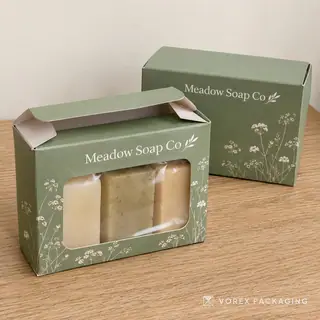
29:01 Maya: With the box. Look at everything that's part of it. Is it plain kraft paperboard? Is there a plastic window so people can see the soap? Is there a film lamination? A sticker seal? Each of those changes the answer.
29:13 Jordan: Say it's a plain kraft carton, no window, no laminate.
29:17 Maya: Then you're working with a paper-based box, and the Vorex guide notes that paperboard is widely accepted in curbside programs across the USA. But remember, the symbol is a recyclable claim. So I'd pair it with a short, specific line. Something like, paperboard, please recycle. And check your own market. If you sell mostly in one region, it's worth looking at what that region's programs accept.
29:43 Jordan: And if it does have a window?
29:45 Maya: Then either make the window easy to remove, and say so, or skip the symbol and use a specific instruction instead. Remove the window, recycle the box.
29:55 Jordan: And what about the soap itself? Some soap boxes get a bit greasy or stained.
30:00 Maya: That's a real consideration, and I'd keep it simple. Don't promise more than you know. A clear instruction, and an honest description of the material, will always be on safer ground than a big symbol with nothing next to it.
30:13 Jordan: So, can you print the symbol?
30:15 Maya: Maybe. Check the materials, add a specific instruction, and make sure it's true where you sell. Material, instruction, proof.
30:22 Jordan: Material, instruction, proof. I like that. That's our episode on green claims and honest packaging. Maya, how do people take the next step?
30:36 Maya: Start with the guide on the Vorex website, eco-friendly packaging choices. It covers right-sizing, recyclable materials, mixed materials and compostable options, and it links to the F T C and Competition Bureau guidance.
30:51 Jordan: And when you're ready for boxes?
30:53 Maya: Request a quote at vorexpackaging.com/quote. Tell them the style, the inside size, the quantity, and this time, tell them what you want the packaging to do at the end of its life. Recyclable where paper is collected, fewer plastic parts, a paper insert, whatever matters to you.
31:11 Jordan: And ask about the material details you want to print.
31:15 Maya: Exactly. If you plan to print a recycled content number or a certification, put that in your request, and the quote will tell you what's available for your order.
31:24 Jordan: You can also try the 3D design preview on the home page. Upload your logo, pick a box shape and color, and turn it around in your browser before you decide anything. And the full catalogue of styles is on the website too.
31:39 Maya: There's also something new on the website. The standard packs and single-piece listings now have an Add to cart button. You can check out with pay later. No card is needed at checkout, and you're invoiced after you approve your proof.
31:53 Jordan: So you can order a standard pack the way you'd order anything online, and still see a proof first.
31:59 Maya: Right. The current prices are on the packs page at vorexpackaging.com/packs. Prices can change, so the website and your quote always have the final word.
32:11 Maya: Yes. You approve it and confirm the order, and then the full batch is printed.
32:20 Jordan: Which is a great moment to check your claims, too. Hold the sample, read every word on it, and ask, is this true?
32:27 Maya: A few Vorex facts in one place. There is no minimum order quantity: order 1 piece or 10,000. Production is fast once you approve your proof, and then your order ships. [Correction, 2 Nov 2026: shipping is free on every order.] And there's a reprint for production errors reported within sixty days of delivery.
32:48 Jordan: If you're new, the code FIRST20 takes twenty percent off your first custom order. It's for new customers, one per business, and it isn't combined with other offers or used on the packs.
32:59 Maya: And if your date is tight, ask about rush orders when you request your quote.
33:04 Jordan: A word on how Vorex works. Vorex Packaging is a packaging studio. They help with style, sizing and design, and they print and ship to customers across the United States.
33:17 Maya: Everything we mentioned today, the Green Guides page, the sections on recyclable, compostable, degradable and recycled content claims, the Competition Bureau's Keurig release, F S C's label definitions, and the Vorex eco guide, is linked in the show notes.
33:35 Jordan: If this episode helped, follow the show, and send it to someone who's about to print a leaf logo on ten thousand boxes.
33:42 Maya: Be specific, be true, and tell people what to do with the box.
33:46 Jordan: Be specific, be true, and tell people what to do with the box. Thanks for listening to The Vorex Packaging Podcast. I'm Jordan.
33:55 Maya: And I'm Maya. See you next time.
Voices produced with AI text-to-speech.