









Types of Packaging Materials: A Plain Guide for Small Brands
Updated · Vorex Packaging
The main packaging materials for consumer products are paperboard for light retail cartons, corrugated board for shipping and mailer boxes, rigid chipboard for premium gift boxes, kraft paper for a natural look, flexible films such as Mylar for pouches and bags, clear plastic for windows and display, and tin for reusable containers. Pick by product weight, how the pack travels and the look you want.
Step by step
List what the pack must do
Write down whether it ships by mail, sits on a shelf or is handed over in store, and what could damage the product: crushing, moisture, light or air.
Match the weight
Use paperboard for light items, corrugated for anything shipped or heavy, and rigid board when the box itself is part of the gift.
Decide on barrier needs
Food, tea, coffee and powders often need a film pouch or liner that keeps out air and moisture.
Choose the look
Kraft reads natural, white board carries full color, rigid board reads premium. Finishes such as lamination, foil and spot UV go on top.
Check end-of-life claims
Before printing recycling or compostable claims, confirm the exact material and the rules where you sell.
Order a sample
Pack a real product, shake it, stack it and ship it to yourself before committing to volume.
Paper-based materials
Paperboard (SBS and folding carton board)
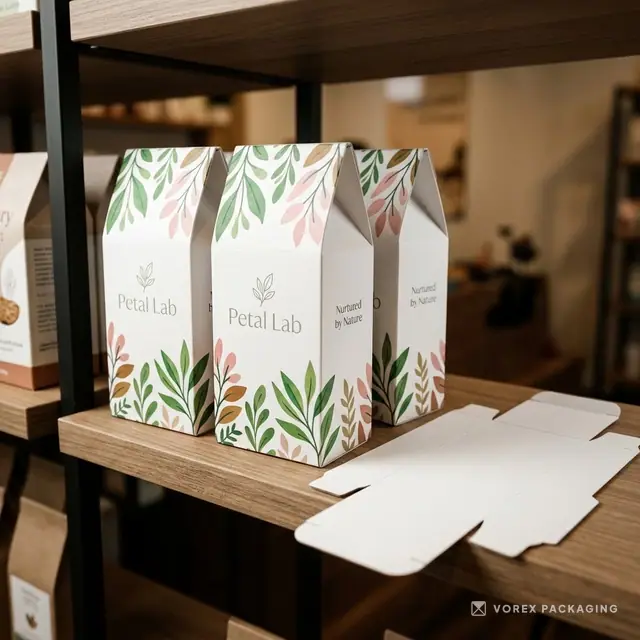
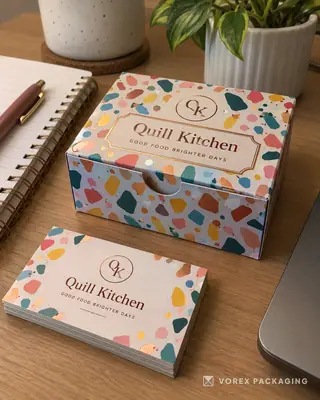
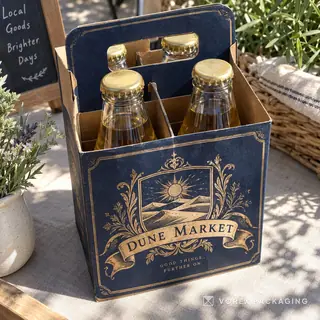
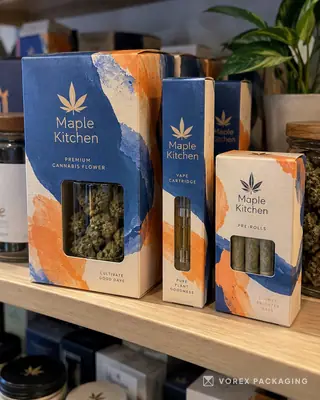
A single smooth sheet used for folding cartons: cosmetics, supplements, candles, food sleeves. It prints sharply and folds cleanly but offers little crush protection on its own, so it suits light products or packs that travel inside another box.
Corrugated board
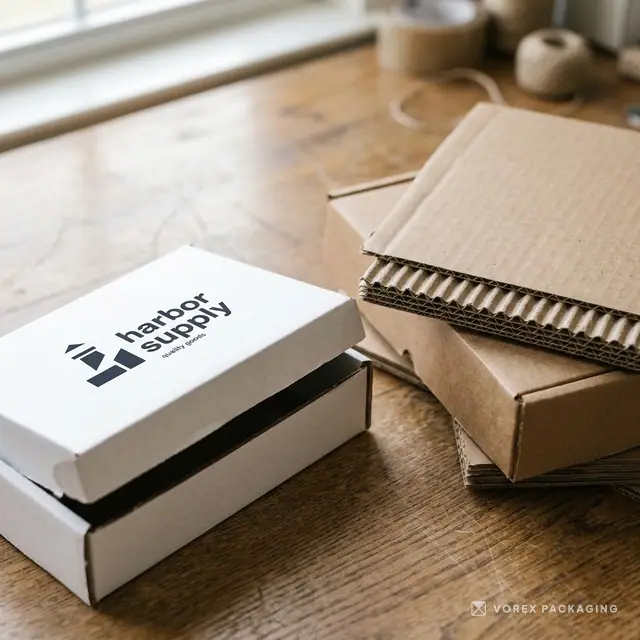
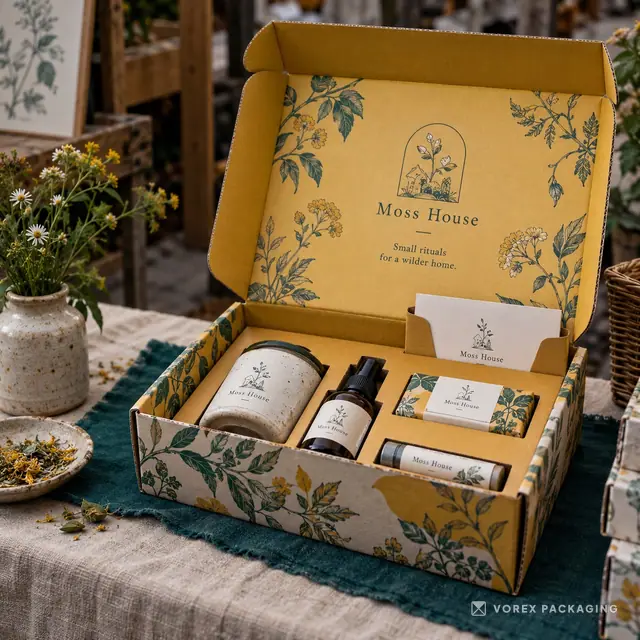
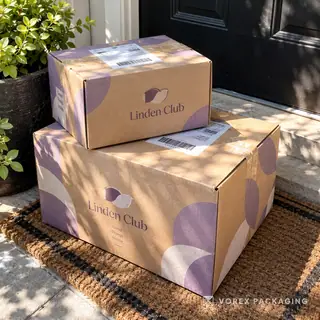
A wavy fluted layer glued between flat liners. The flutes absorb knocks and resist stacking pressure, which makes corrugated the standard for shipping boxes and mailer boxes. Thin E-flute prints well for branded mailers; thicker B-flute and double-wall carry heavier loads.
Rigid chipboard
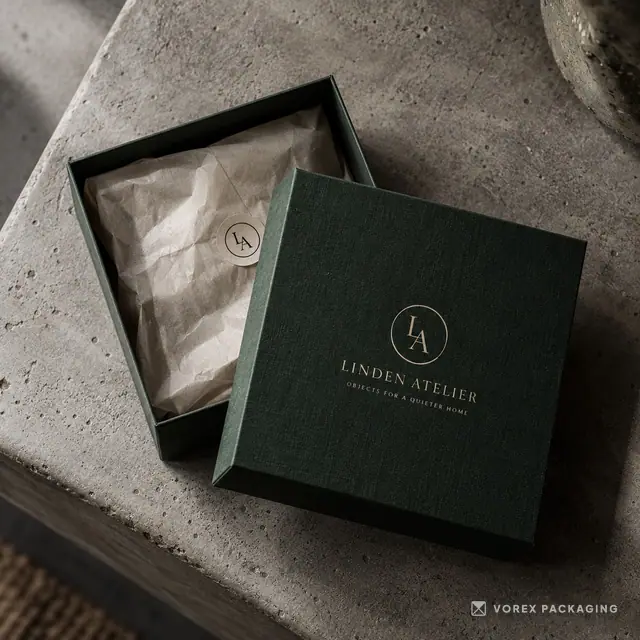
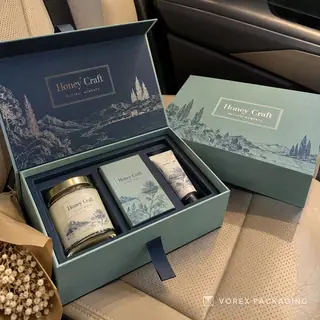
Thick, dense board wrapped in printed paper. It does not fold flat, so it costs more to make and ship, but it gives the solid feel of magnetic, two-piece and drawer boxes used for gifts, electronics and luxury goods.
Kraft
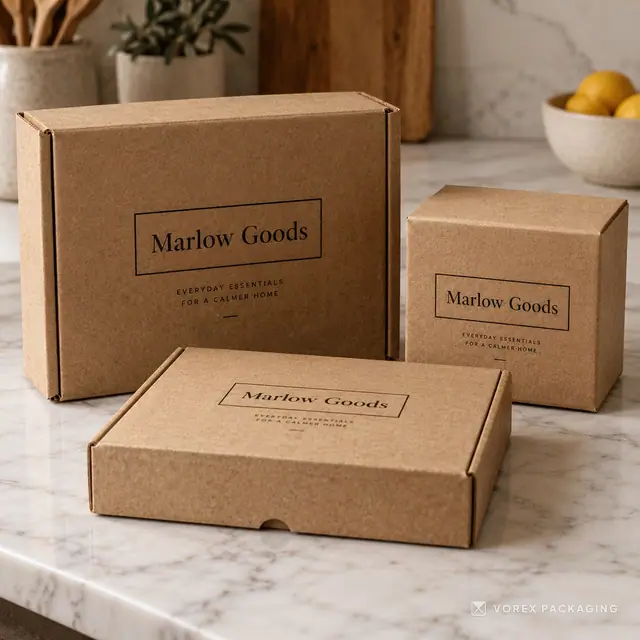
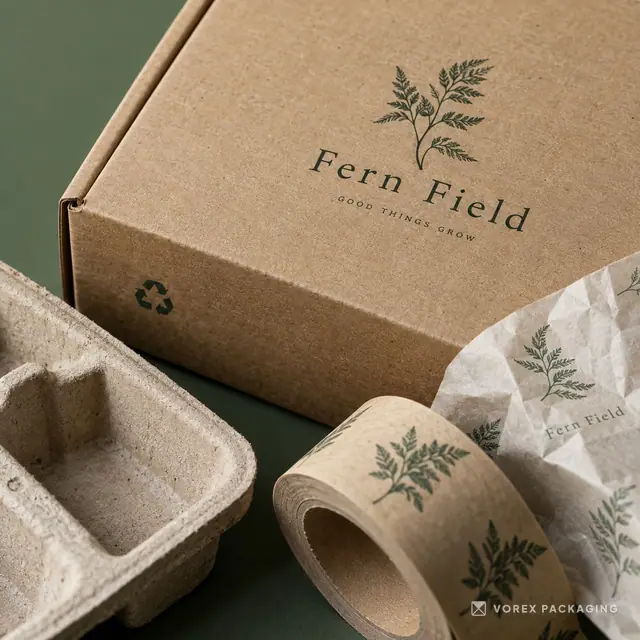
Unbleached brown paper or board. It is used for mailers, bags and cartons where a natural, simple look fits the brand. One- and two-color prints look best on it; pale colors can look muted without a white underlay.
Films, plastics and metal
Mylar and laminated pouches
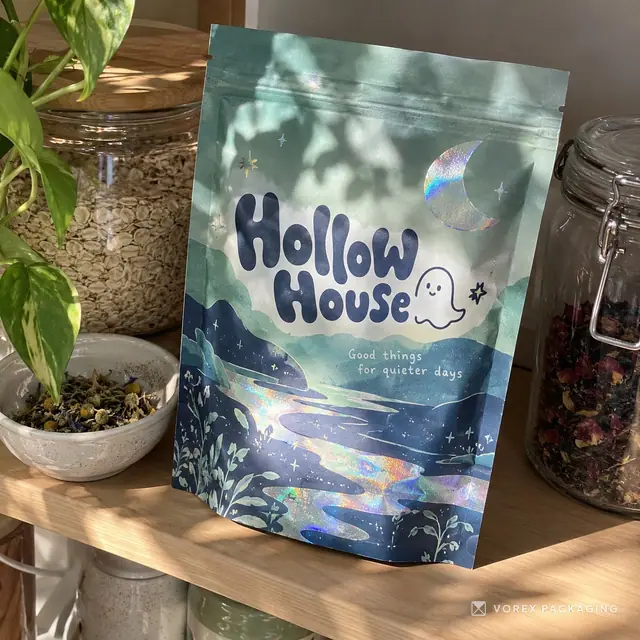
Layered films, often with a metalized layer, that block moisture, air and light. They are used for coffee, tea, snacks, supplements and other products that go stale. Options include zip closures, hang holes and clear windows.
Clear PET
Transparent plastic used for window patches, clear boxes and display lids so shoppers can see the product.
Poly mailers
Light, waterproof polyethylene bags for shipping soft goods such as clothing.
Tin
Metal containers for tea, candles, mints and gifts. Customers often keep and reuse them.
Protective and inner materials
Inserts made from paperboard, corrugated, molded pulp or foam hold a product still inside the box. Tissue paper, crinkle paper and paper void fill add presentation and cushioning. For fragile items the insert usually matters more than the outer box.
How to choose
- Shipped direct to customers: corrugated mailer or shipping box, with an insert for anything fragile.
- Retail shelf: paperboard carton, optionally with a window.
- Premium gift: rigid box.
- Dry food and powders: barrier pouch, alone or inside a carton.
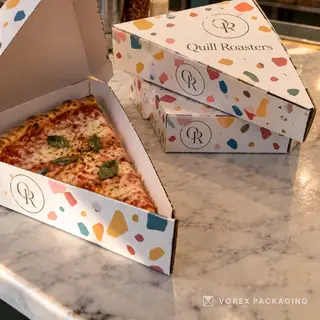
- Carry-out: paper bag, gable box or food-grade paperboard.